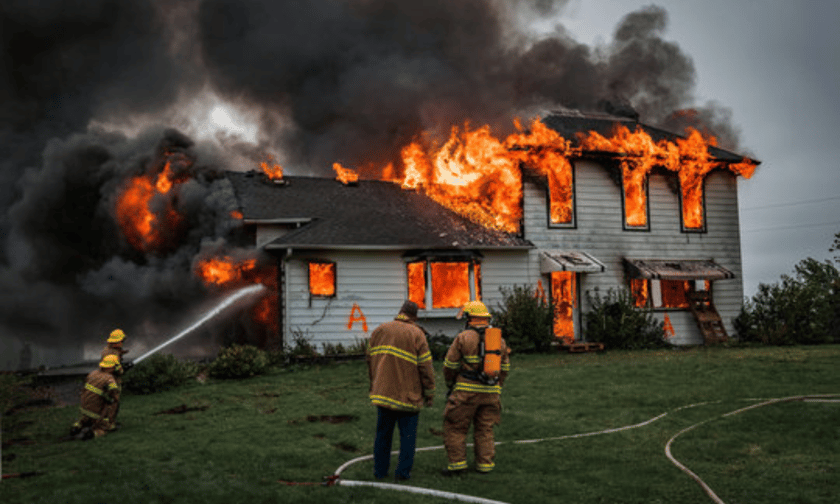
The Kingston fire in Conception Bay North has exposed a critical vulnerability: a large share of residents had little or no insurance.
Local estimates suggest that 60% to 70% of households were uninsured, while many of those coverage carried only partial protection.
According to a report from The Telegram, high premiums remain a major barrier. Without fire hydrants in many communities, insurers assign poorer Dwelling Protection Grades, making policies more expensive. Michael Currie, vice-president at Fire Underwriters Survey, explained that communities with stronger firefighting capacity and reliable water supply generally qualify for lower premiums. He later confirmed that the installation of hydrants and other public fire protection improvements can reduce costs by 20% to 30%.
Volunteer firefighter training and limited suppression capacity have also been cited by residents as factors pushing premiums out of reach. In effect, structural gaps in local infrastructure have left households unable to access adequate coverage.
Nearby Harbour Grace recently secured $4 million in funding for water and sewer upgrades, including hydrants, under a broader $123.1 million Canada Housing Infrastructure Fund initiative. But no similar projects are yet confirmed for Conception Bay North, where municipalities must apply for provincial infrastructure funds.
The Insurance Bureau of Canada (IBC) said it is monitoring the situation and working with government partners on relief programs.
While insurers generally do not cover losses for those without policies, some carriers have extended grace periods for premium payments, waived certain exclusions, and offered expedited claims for existing customers. Adjusters have been dispatched to assist policyholders with damage assessments, though industry officials acknowledge that limited coverage in the region will leave many residents reliant on government aid.
The situation reflects a wider insurance challenge across Canada. In Alberta, insurers are leaving the auto and property markets under the weight of rising claims and severe weather, with billion-dollar hailstorms pushing premiums beyond reach for many households. In British Columbia, wildfires have repeatedly tested insurance availability in high-risk areas, with some carriers scaling back coverage or imposing higher deductibles. Nationally, industry groups warn that the affordability gap will grow unless governments invest in resilience measures that reduce underwriting risk.
Premier John Hogan has acknowledged that rebuilding will take years, while Prime Minister Mark Carney has pledged federal support, including investments in fire detection and prevention. Yet for many residents, immediate access to affordable insurance remains the bigger obstacle.
“What (we’re) looking for right now is for the government to step up and demonstrate leadership and make this area whole again,” said Bob Kelland, an engineer who lost two properties in Ochre Pit Cove. “I think the government's going to quickly forget about this; I think they have an election happening right now, and they're more focused on the big national projects like the energy projects. And now that this catastrophe is out of the news cycle, I think those in Conception Bay North will be forgotten.”