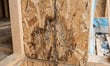
What happened: a Manitoba court dismissed a bid by a builder and its first insurer to force a second carrier to share defence costs over a leaky condo project
Who's involved: Federated Insurance, Hillside Construction, and Wynward Insurance Group
What's at stake: an unspecified share of defence costs in a construction-defect lawsuit brought by a Winnipeg condominium corporation
Why it matters: a standard property-damage exclusion defeated the defence-cost claim because the builder owned the property during construction
Where it stands: interim ruling only - stage two will revisit coverage after the underlying lawsuit concludes
A condominium project leaking through its walls, rotting from the inside, and growing mould - and two insurers that covered the builder at different times cannot agree on who should pay to defend the lawsuit.
The Court of King's Bench of Manitoba has sided with one of them. In a ruling delivered November 3, 2026, the court dismissed an application by Federated Insurance Company of Canada and its insured, Hillside Construction Inc., to force Wynward Insurance Group to cover half the defence costs arising from a construction-defect claim.
The reason was a detail hiding in plain sight.
Hillside built three condominium buildings at 1106 Dawson Road in the Rural Municipality of Tache, Manitoba, between May 2012 and August 2013. Federated held the commercial general liability (CGL) policy for the first stretch - up to March 23, 2013. About a month before the project wrapped, Hillside bought a separate CGL policy from Wynward, which ran through to March 23, 2019.
Years later, Winnipeg Condominium Corporation No. 811 - the condo's current owner - sued Hillside. The claim: water infiltration, significant rotting of wood and OSB sheathing, and mould growth across the property. That lawsuit was filed in 2023.
Federated had been covering Hillside's defence. It wanted Wynward to pick up half the tab, arguing both carriers sat on back-to-back periods of risk for the same project and that damage developing slowly over years should trigger coverage under both policies.
Wynward's position was blunt: it never agreed to cover this project. During negotiations before the policy was finalised, Wynward said it was asked to include the project in its coverage and expressly refused. Before binding, Hillside's broker confirmed the builder already had coverage for the project from another insurer.
On top of that, Wynward pointed out it was on risk for roughly six weeks of a 65-week construction period. If it had to contribute anything at all, it argued its share should be no more than 10 percent.
The court did not need to wade into the negotiation history or the time-on-risk arithmetic. Applying the pleadings rule - where the court takes the allegations in the underlying lawsuit at face value without conducting its own fact-finding - the court found that the "Damage to Property" exclusion in the Wynward policy was "clearly and unambiguously" engaged.
The logic turned on ownership. The underlying lawsuit said Hillside owned, developed, and constructed the project. Under the Wynward policy's property-damage exclusion, damage to property owned by the insured is not covered. Because the pleadings established that Hillside owned the property during construction, the exclusion applied on its face.
The court also refused to consider late-filed affidavits from the applicants, finding they were submitted outside the agreed timeframe and amounted to the kind of evidence that would improperly turn a defence-cost question into a full-blown fact-finding exercise.
The ruling carries an explicit caveat. The court noted this was a stage-one determination only and that "a full consideration of the same issue on the basis of all of the evidence at the second stage may result in a different conclusion." Stage two - addressing whether Wynward must contribute to any future judgment and costs - will proceed after the underlying condo lawsuit is resolved.
With the application dismissed, the defence costs remain where they were before the ruling was made. Costs on the first stage may be revisited at stage two.
For carriers and coverage teams handling CGL construction files, the case shows how the pleadings rule can resolve a defence-cost fight before the parties ever reach the question of how to divide the bill - especially when a standard exclusion catches the insured's own property.