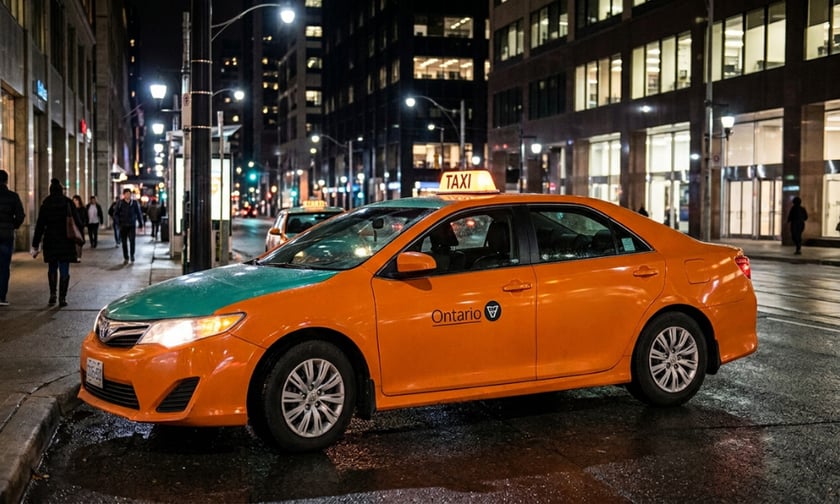
An Ontario tribunal has denied a widow’s bid for CAA Insurance to pay death benefits, ruling her husband’s fatal fall was not a car accident.
Nearly three years ago, a taxicab driver was found unresponsive near his running vehicle, suffering a fatal head injury. His spouse applied for death and funeral benefits under the Statutory Accident Benefits Schedule. CAA Insurance denied the claim, arguing the use or operation of the vehicle did not directly cause his death.
Vice-Chair Trina Morissette addressed the dispute as a preliminary issue: whether the incident met the Schedule’s definition of an "accident," which requires that the use or operation of an automobile directly cause an impairment.
The driver, 58, dropped off a fare at 3:44 a.m. on September 23, 2023. About an hour later, a witness found him lying on the ground three feet from the open driver’s door, unresponsive, with blood pooled around his head and the engine still running. He died four days later. A postmortem determined the cause of death was blunt force head injury, but the coroner recorded the manner of death as undetermined.
Investigators found nothing pointing to a collision, an assault, or a robbery: the vehicle carried no blood or fibres, and the driver had no defensive injuries. The coroner considered the injury pattern more consistent with a backward fall than an attack.
Morissette applied the two-part test set out by the Ontario Court of Appeal in Economical Mutual Insurance Company v. Caughy: whether the incident arose from the use or operation of an automobile, and whether that use or operation directly caused the impairment. She found the first part satisfied, since picking up and dropping off fares is an ordinary use of a taxicab.
Morissette weighed two competing theories on causation - a heart arrhythmia, or a slip or trip while the driver checked the vehicle or retrieved an item. She found no evidence supporting a slip or trip. The driver, by contrast, had a history of significant heart disease, including bypass surgery in 1997 and a second heart surgery in 2020, and toxicology testing found a cardiac antiarrhythmic medication in his system at the time of the incident.
On balance of probabilities, Morissette found the fall was caused by a heart arrhythmia. She concluded it was an intervening cause and the dominant feature behind the injuries, since it was "not a normal risk created by the use or operation of an automobile."
The tribunal found the causation test was not met and dismissed the application, ruling the driver’s spouse was not entitled to death and funeral benefits under the Schedule.