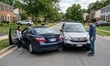
ICBC's liability split collapsed after a BC tribunal rejected the insurer's hearsay account of a Vancouver sideswipe and faulted its unproven policy breach claim.
The Civil Resolution Tribunal of British Columbia issued its decision on May 22, 2026 in Aziz v. ICBC, 2026 BCCRT 808 (CanLII), a small claims dispute arising from an October 2, 2022 collision on Kerr Street in Vancouver. Insurance Corporation of British Columbia had assessed driver Abdul Aziz 50 percent responsible for the accident and billed him $3,647.10 to repay his 50 percent share of the other driver's vehicle damage claim. Aziz disputed the liability split and sought $5,000 in compensation.
According to Aziz, he was northbound in the right lane intending to turn right onto East 54th Avenue when the other driver, identified in the decision as AH, suddenly pulled from the left lane into his lane and sideswiped his vehicle. ICBC's account had AH and Aziz both changing into the right lane at the same time after a vehicle ahead of AH stopped to turn left.
Vice Chair Andrea Ritchie noted that ICBC produced no documentary evidence supporting its version of AH's account - no statement obtained online, no statement over the phone, nothing. The tribunal treated ICBC's submissions about AH's version as hearsay and declined to rely on it, given that the cause of the accident was a primary issue. ICBC did not explain why AH's statement was not in evidence.
Preferring the applicant's account, the tribunal found AH solely responsible for the collision.
ICBC had also argued that even if Aziz was not at fault, he was excluded from coverage because he breached section 55(3)(a) of the Insurance (Vehicle) Regulation, which requires an insured to be authorized and qualified by law to operate the vehicle. The tribunal was unmoved. Ritchie wrote that beyond the bare assertion, ICBC "does not explain how" Aziz breached the policy. With the burden on the insurer to prove a policy breach and no documentary evidence offered, the alleged breach was unproven. Aziz had said ICBC authenticated his license.
The decision also touched on the coverage dispute framework under sections 28 to 30 of the Basic Vehicle Damage Coverage Regulation. ICBC argued the claim was a coverage dispute that had to go to arbitration rather than the CRT. The tribunal disagreed, finding the dispute did not fall within section 28.
Despite the favourable liability findings, Aziz received no remedy. He had not paid anything toward the $3,647.10 invoice and acknowledged the heart of his dispute was the liability assessment rather than financial reimbursement. The tribunal explained that orders reassessing fault, cancelling the invoice, or declaring non-responsibility are forms of injunctive or declaratory relief - and the CRT's small claims jurisdiction cannot grant them in these circumstances. Aziz had originally filed under the CRT's accident claims jurisdiction before re-filing as a small claims matter.
Under section 10(1) of the Civil Resolution Tribunal Act, the tribunal refused to resolve the dispute. Aziz's claim for tribunal fees was dismissed.
For claims professionals, the decision is a reminder that asserting a policy breach or relying on a third-party account is not enough. Without documentary evidence, an insurer's case can fall apart on burden of proof grounds - even when the procedural outcome ultimately favours the insurer.