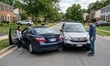
What happened: A claimant tried to escape Ontario's $3,500 Minor Injury Guideline cap after a 2023 car accident, pointing to chronic pain and anxiety.
Who's involved: Belair Insurance Company Inc. and the claimant, backed by dueling medical opinions.
What's at stake: About $10,800 combined across five disputed chiropractic and psychological treatment plans.
Why it matters: A missing mention in family-doctor records - and a clinic's billing log standing in for real notes - were enough to sink the bid.
Where it stands: Decided - the Licence Appeal Tribunal dismissed the application on September 21, 2026.
A family doctor's notes stretching back nearly two years never once mentioned the car accident a claimant blamed for chronic pain and anxiety.
He was hurt in a motor vehicle accident in February 2023 and applied to Belair Insurance Company Inc. for statutory accident benefits. Belair said the injuries were minor - a strain, sprain or similar soft-tissue injury - which under Ontario's rules caps medical and rehab coverage at $3,500. The claimant pushed back, arguing chronic pain and a psychological injury put him outside that cap.
The dispute landed at the Licence Appeal Tribunal, Ontario's referee for accident-benefit fights between insurers and claimants. At stake were five treatment plans worth close to $10,800 combined: a psychological assessment and four rounds of chiropractic care billed between mid-2023 and late 2024.
His case rested on two things: his family doctor's records, and a disability certificate from a chiropractor who'd noted "nervousness" and a "state of emotional shock and stress." The tribunal wasn't swayed - a chiropractor, it pointed out, isn't trained to assess mental health.
That left the family doctor's chart. And it had a problem.
Between January and October 2024, the doctor's notes never once brought up the crash. The very first entry says the claimant had "no acute issues." Later visits were about sleep apnea and tailbone pain he said "runs in the family."
He reported no back pain, tingling or numbness. None of it tied back to the crash.
A trip to his endocrinologist for diabetes hit the same wall: "no major health issues since last seen," nothing about the accident. A sports medicine visit months later chalked his tailbone pain up to mechanical causes - again, nothing accident-related.
He also leaned on a second clinic, E-Clinic United Healing, to back his chiropractic claims. Problem is, those clinical notes never actually made it to the tribunal. What showed up instead was an account summary - basically a log of which bills got approved or denied, not proof of what treatment happened.
A billing summary, the tribunal said, isn't a substitute for an actual treatment record.
Belair's experts told a tidier story. An independent physician examined the claimant twice - once in 2023, once in 2024 - and called the injuries minor both times. An independent psychologist agreed on the mental health side, noting the claimant himself said he "did not feel he required any psychological intervention at this time."
To prove chronic pain without a formal diagnosis, there's a six-point checklist tribunals borrow from American Medical Association guidelines - things like relying on pain medication, pulling away from friends and family, or never getting back to your normal routine. Belair's argument: he ticked none of the boxes. He kept working, kept traveling, and never touched pain medication.
The tribunal agreed across the board. Minor injuries, $3,500 cap upheld, application dismissed. There's no sign yet of an appeal.
A disability certificate from the wrong specialist, plus a billing log standing in for real clinical notes, left the tribunal with nothing solid to grab onto - and that kind of gap sinks far more MIG bids than any actual dispute over the medicine.
This piece is based on a Licence Appeal Tribunal ruling.