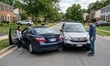
What happened: A BC tribunal threw out ICBC's finding that a driver was fully at fault for a crash.
Who's involved: The driver who challenged ICBC's finding, and ICBC; Tribunal Member Deanna Rivers decided the case.
What's at stake: ICBC must amend its fault assessment and pay the driver $125 in CRT fees.
Why it matters: the ruling faults ICBC for using a legal presumption to avoid explaining a credibility call.
Where it stands: Decided September 21, 2026; ICBC must amend its assessment within 21 days.
A driver blamed a speed bump for not seeing a truck backing out in front of him. Scene photos later showed there was no speed bump at all.
The excuse came from the motorist who ran into the back of a truck at a British Columbia RV park on February 26, 2024, while its driver was reversing to hitch up his RV. The Insurance Corporation of British Columbia (ICBC) relied on that account, among others, to find him 100% responsible.
British Columbia's Civil Resolution Tribunal has now thrown that finding out, ruling he bore no responsibility for the crash at all.
He was mid-hookup: reversing his truck partway into the park's access road at an angle, planning to pull forward, then reverse again to line up with the RV's hitch. His wife - identified in the decision only as MS - stood near the truck's rear corner with a two-way radio, watching for traffic he couldn't see from the cab.
He says he checked his mirrors and backup camera before reversing at idle speed, foot hovering over the brake. Then his wife told him to stop.
He says only the driver's-side rear corner of his truck had reached the pavement when he saw the other driver's car approaching in his camera. He was stopped for a few seconds before it hit his rear bumper.
The other driver - identified in the decision as JJ - told ICBC a different story each time. First, he said he never saw the truck because he was driving over a speed bump. Then he said he saw the truck parked at an angle and watched it reverse at the last second as he passed. In a later addendum, he said the truck hadn't moved at all until the instant before impact, and that there was no way the driver could have seen him coming.
One of those versions had a problem. Scene photos showed Row A had no speed bump anywhere between the main road and the crash site.
ICBC's letter on the crash, issued in October 2024, leaned on a rule used when the facts are genuinely unclear: whichever driver has the right of way counts as dominant, and the other driver - the servient one - has to prove the dominant driver did something wrong. Because he had been reversing out of a parked position, ICBC called him servient and left him to carry that entire burden.
Tribunal Member Deanna Rivers wasn't convinced. To conclude JJ was already established on the road before he backed up, she found, ICBC had already sided with JJ's version over his - without ever saying why. “I do not accept ICBC’s reasoning,” she wrote. The dominant-servient rule, she found, exists for cases where the evidence alone can't settle whose account to believe. It isn't a substitute for saying so.
That still left a second question. Even if ICBC's process was flawed, was he actually less at fault than it said?
Rivers couldn't tell from the photos alone whether he was reversing at the exact moment of impact. But both sides agreed his truck was already angled across part of the road - enough, she found, to confirm JJ had room to see it and react.
Whichever version was true, JJ should have slowed down or moved over. The false speed bump didn't help his case either.
Rivers weighed his account against BC case law on how much care a reversing driver owes. He'd checked his mirrors and camera, used a radio lookout, and stopped the moment he knew another vehicle was near. She wrote that she saw nothing further he could have done to avoid the accident.
ICBC had argued his RV site sat only 17 metres from the road, so he should have expected traffic with little warning. Rivers wasn't persuaded. Every RV, she noted, eventually has to back onto that road to leave.
She found him zero percent responsible and ordered ICBC to amend its file and reimburse his $125 in tribunal fees, plus interest.
It's the same standard the tribunal keeps coming back to: a fault letter has to hold up on its own reasoning, not just land on the right answer.