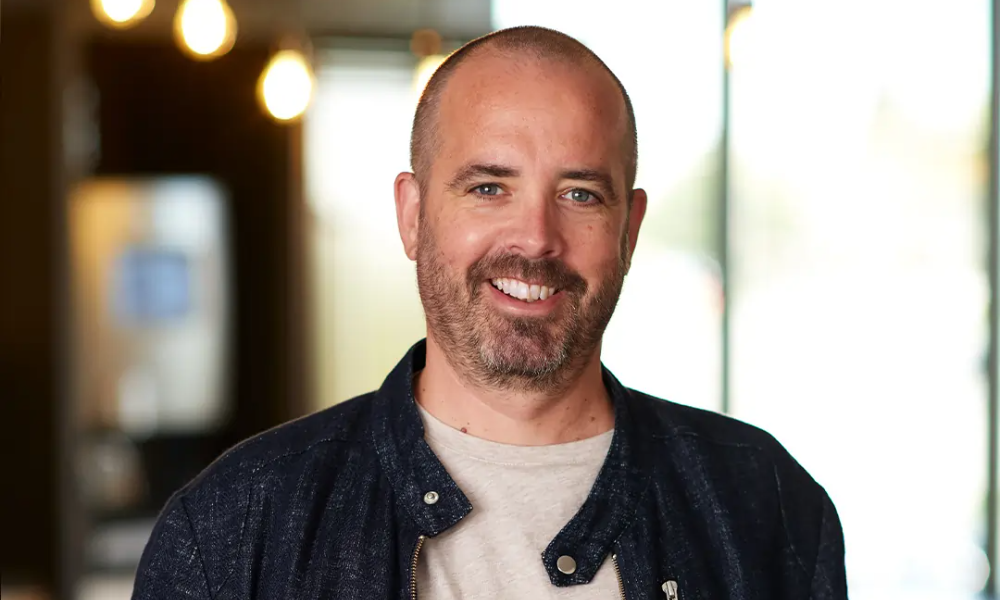
Commercial brokerages that keep client information in producers' inboxes and spreadsheets are exposed when those producers leave, according to Nick Kidd (pictured), co-founder and CEO of Quotey.
In an interview with Insurance Business, Kidd, who has spent more than 30 years in the market on the insurer, MGA and brokerage sides, said the gaps show up in dropped leads, missed renewals and lost clients.
Read more: Price comparison sites are losing Gen Z and Millennials to AI, and it's not just about price
Kidd said no single moment convinced him the industry needed better tools, describing it as "death by a thousand cuts." On the MGA side, he said, he spent his days talking to brokers and visiting brokerages, which showed him that everyone works differently. A broker's personal lines team largely works the same way inside a rating system or broker management system, he said, while the commercial team works in different platforms and methods, with information scattered across them.
He spent years assuming other brokerages had it settled somewhere, until conversations with more of them showed him that "nobody's figured this out."
Commercial knowledge sits in each producer's head, email inbox, spreadsheets or OneDrive, Kidd said, so a brokerage that loses a producer often has little data of its own on those clients. He said there is also a certain leakage that brokers may not recognize.
"There is an incredible talent war out there right now," Kidd said. Departing producers, he said, "typically will bring half their clients with them, if not more," and brokerages are "sort of defenceless against that."
Kidd said he uses the "Wild West" label for commercial lines without meaning it as an insult to the industry. "It's a tooling problem," he said.
On the commercial side, he said, brokerages run on applications, renewal lists, spreadsheets and PDFs, and each brokerage has a different set. The costs include dropped leads and too much back and forth with underwriters to settle a complete application, he said, and the gap between quoting in five days and quoting in 30 minutes changes the odds of winning a client dramatically. Teams working across 10 to 13 different systems and spreadsheets, with data scattered across them, produce what Kidd called "organized chaos," which costs time and renewals.
Renewal tracking is a typical example, Kidd said. Many brokers keep their own renewal spreadsheets, which he called "just fallible," and which make it hard for a brokerage to see which renewals are due in the next three months and where each stands.
The problem has grown as the workforce has turned over. Kidd said retirements accelerated during COVID and a number of younger brokers have come in since. "Brokers are not typically good trainers of other brokers," he said, and onboarding often amounts to a welcome, an opportunity and an invitation to ask questions.
Kidd pointed to E&O insurance. "It's not a cheap product because the errors and omissions exposure is really, really real for their brokerage," he said.
The gap shows up in complex lines as well. Brokers are often told to cross-sell cyber without a clear way to do it, Kidd said, and "brokers don't feel comfortable with that." In a cyber application, a broker who doesn't understand technology ends up asking a client's CEO or CFO about information security controls that the client doesn't understand either.
Kidd said he understands why brokers are skeptical of new technology. "There's been so many promises from tech over the years, and especially in commercial, very few, if any, of them have delivered," he said.
That skepticism runs deepest among long-tenured producers. A producer who has worked the same way for 30 years has a team fine-tuned to support that approach, Kidd said. "You're not waking up in the morning thinking, I need to change the way I do my job." Brokers earlier in their careers are more likely to recognize the pain points and look for alternatives, he said.
Read more: AI's biggest risk for life insurers isn't speed, it's 'cognitive surrender,' says industry veteran
Kidd, who described himself as "an insurance guy, not a tech guy," said technology entrants from outside insurance tend to default to replacing the broker with software. "The broker is the service. They just need the tools," he said. Commercial insurance is nuanced, with many products and categories, and "vanilla tech alone just doesn't get it and doesn't understand it."
He was also critical of portals that offer end clients a quote from three questions. "How do you build trust without knowing anything?" Kidd said.
AI is the longer-term cost, Kidd said, and every broker worries about what the brokerage next door is doing with it.
"Nobody's really doing anything exciting with AI in commercial, because to really make AI work, you need structured data," Kidd said. "Without some kind of tooling and systems, you don't have structured data upon which you're going to layer the AI."