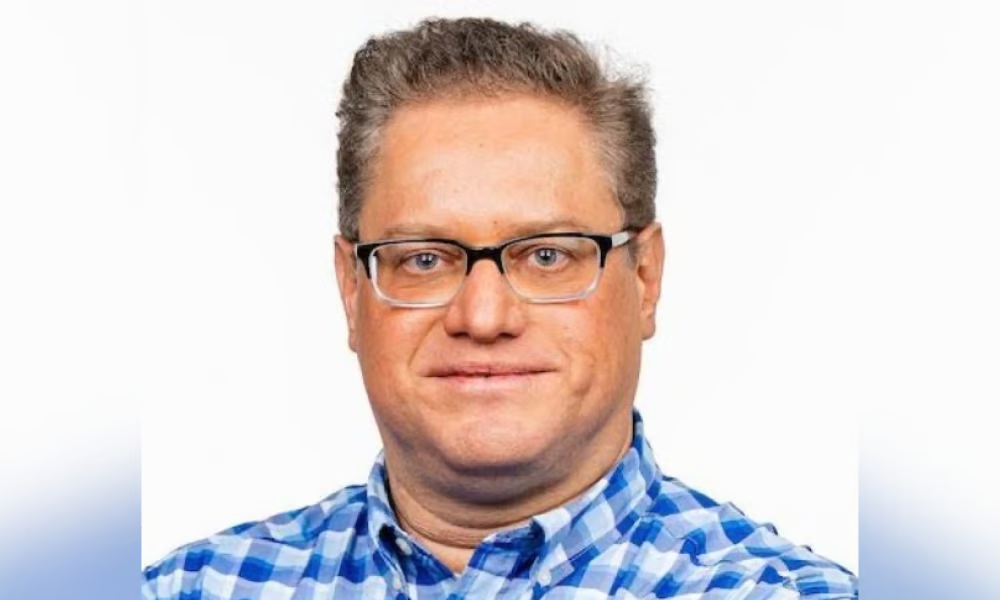
Despite obvious similarities, robotaxis need a different underwriting approach than human-driven vehicles, according to Henry Kowal, director of insurance product at Arity.
"It is a very different risk profile, no doubt," Kowal said in an interview with Insurance Business.
Traditional auto underwriting prices the person behind the wheel: age, history, driving record. None of that applies once the driver is gone, Kowal said.
"It's shifting from a human driver to more of the system or the software," he said.
Read more: Waymo recalls nearly 3,800 robotaxis after driverless car drove through a flooded road
Kowal added that the road environment matters just as much as the system itself. Human drivers, cyclists and pedestrians sharing that road generate a large share of the risk, and driving behavior data gives insurers visibility into how that surrounding traffic behaves.
Kowal pointed to a stranding in San Francisco this past July 4th, when holiday fireworks, heavy congestion and a cell service blackout left a number of Waymo vehicles stuck. EV batteries drained in gridlock. Vehicles lost their remote connection when cell service dropped. The driving software wasn't the problem.
"These are all factors that traditional models have never had to contend with before," Kowal said.
Kowal noted that liability itself is a legal question outside his area. Fault, he said, gets assigned differently depending on the jurisdiction a crash happens in.
"The regulatory environment varies quite a bit from country to country," Kowal said. Liability in the US tends to be handled state by state, he added, while Canada splits jurisdiction between federal and provincial regulators. The same type of crash, he said, could be handled quite differently depending on where it happens.
Kowal cited an incident in Dallas where a pedestrian was thrown toward a Waymo vehicle that had already slowed to roughly five miles an hour. Data on the vehicle's speed, its detection of the pedestrian and its braking showed the Waymo wasn't at fault.
"Driving behavior data can help everyone reconstruct what actually happened right before, during, and after the collision event," Kowal said.
Kowal described the industry's response to robotaxi expansion as a mixed bag. Some reinsurers and insurers are building frameworks proactively and partnering directly with AV companies, he said. Much of the industry, though, is still catching up after the fact.
"The rules and oversight around incidences usually tighten, but only after the incident happened and not before," Kowal said.
He pointed to the 2023 Cruise incident in San Francisco, where a robotaxi dragged a pedestrian, as an example.
"California pulled permits, I think, within weeks, but it took the state until this year actually to kind of fix the underlying gaps," Kowal said.
Read more: Robotaxi crash data is strong, but untested for Canada's weather
Kowal is skeptical of underwriting robotaxis the old way, waiting years for claims history to accumulate before pricing the risk. By the time that history exists, he said, deployment will have already moved on. Insurers need to stop asking where losses have already occurred and start asking where risk is building right now, he added.
"Driving data is more of a leading indicator versus a lagging indicator," Kowal said.
Zurich Australia recently became the first insurer in that market, and only the second globally, to build Tesla's Full Self-Driving (Supervised) technology into how it prices car insurance. FSD-equipped vehicles are now assessed as lower-risk policyholders, alongside the usual inputs of age, location and claims history.
The system Zurich is pricing for is narrower than the robotaxi model Kowal described. Tesla's FSD is Level 2 driver assistance, not Level 4 autonomy, so a human still supervises the vehicle and carries legal responsibility for it. Alex Morgan, Zurich's head of general insurance, pointed to early claims data showing fewer collisions on automated trips than human-driven ones, while acknowledging humans "make mistakes" and "get tired."
It's a narrower version of the same shift Kowal pointed to: the system behind the wheel, not just the person, is becoming something insurers have to price for directly.