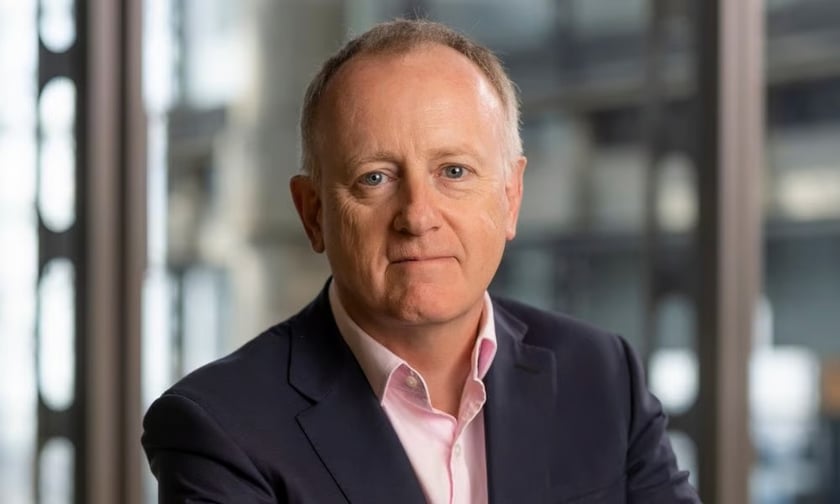
The Council of Lloyd's has concluded that former chief executive John Neal breached the corporation's compliance rules and fell significantly below the standards expected of his role, following an investigation conducted with the support of external legal counsel.
The Council found that Neal's relationship with Rebekah Clement, the former corporate affairs director at Lloyd's, was sufficiently close during their employment that it could be viewed as creating a perceived conflict of interest. Neither Neal nor Clement disclosed the relationship, in breach of Lloyd's global compliance policy, which requires disclosure of any conflict of interest, including perceived conflicts. The investigation found no conclusive evidence that the pair were engaged in a romantic relationship during their employment at Lloyd's.
Senior individuals at Lloyd's raised concerns directly with Neal on more than one occasion regarding the nature of his relationship with Clement. Neal acknowledged the concerns and his responsibilities to Lloyd's and undertook to modify his conduct, but the investigation found no evidence of material change in his behaviour thereafter. The Council concluded that his failure to address those concerns was a breach of the standards expected of a Lloyd's chief executive, with judgement, transparency and accountability all found to be deficient.
The Council found no evidence of process failures in Clement's promotion to corporate affairs director. It did conclude that she should have modified her behaviour, given she was aware of rumours regarding the nature of her relationship with Neal and should have disclosed the perceived conflict. The conduct of both individuals resulted in reputational damage to Lloyd's Corporation and the Lloyd's market, the Council said.
The investigation also found that Neal failed to confirm that certain whistleblowing reports made in November 2023 were properly handled in line with his responsibilities as chief executive - failures Lloyd's identified in October 2025. Sir Charles Roxburgh, chair of Lloyd's, said the failure to escalate the whistleblowing reports in line with established policies amounted to a potential governance failure, and Lloyd's immediately informed the Financial Conduct Authority in accordance with its regulatory obligations.
Because of these failures, the Council was unaware that whistleblowing reports had been made and was unable to take appropriate action at an earlier stage. To protect the identity of the whistleblowers, Lloyd's said it could not share the nature of the allegations nor the identities of those against whom they were made.
Roxburgh launched an expanded investigation in November 2025 after becoming aware of new information related to an alleged personal relationship between Neal and Clement. Nearly 40 witnesses were interviewed in total, with a number coming forward late in the process. As both Neal and Clement had left Lloyd's before the investigation expanded, the Council's ability to obtain information was limited - both declined to answer questions relating to the nature of their relationship following their departure, and Neal also declined a request to provide access to his mobile device.
The Lloyd's Remuneration Committee has since written to Neal to inform him that, had he retained any unvested variable remuneration, his conduct would have warranted the cancellation of a portion of those awards; Neal forfeited his unvested compensation on resigning. Roxburgh, who commissioned a review of Lloyd's governance arrangements shortly after taking up his role, said the corporation has since adopted heightened Council oversight, revised committee structures, changes to senior appointment procedures, enhanced disclosure requirements and a duty of candour imposed on the chief executive. Lloyd's is now updating its Code of Conduct, including guidelines on the use of social media and personal relationships at work.
"Based on the findings of this investigation, we have concluded that the conduct of the former chief executive fell significantly below the standards expected of him," Roxburgh said. "It also established serious failings in the governance standards and in following processes, most worryingly in the handling of whistleblowing reports. These were serious failures that should never have been allowed to happen."
Roxburgh added that governance alone cannot substitute for culture and personal accountability. "That is why the Council of Lloyd's is unequivocal about the behaviour we expect from everyone, at every level, at the Corporation of Lloyd's," he said.
Sheila Cameron, chief executive of the Lloyd's Market Association, described the investigation as extensive and thorough, and said the witnesses who spoke up during the process showed courage in difficult circumstances. "Good governance depends not just on processes, checks, and balances but importantly on the personal values of those who govern and lead the London insurance market," she said. "We must always be prepared to ask the difficult questions and to listen carefully to those who sound an alarm when standards aren't being upheld."
Caroline Wagstaff, chief executive of the London Market Group, said the investigation was as much about the future as the past. "Real people suffered real harms and that can't happen again," she said, adding that the changes announced by Roxburgh were to be welcomed and supported.