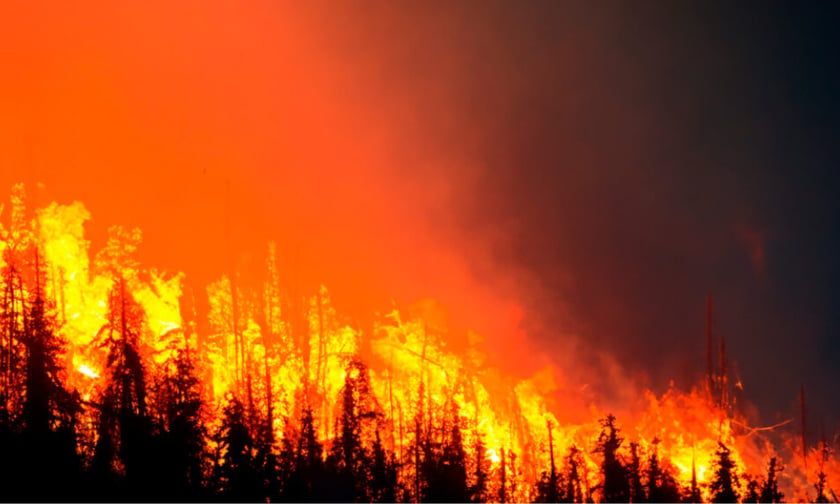
Nearly two years after the July 2024 wildfire that destroyed roughly a third of the Jasper townsite, reconstruction is progressing slowly and a new community survey has laid bare a troubling finding for the insurance industry -- that more than half of affected residents had no homeowner or tenant insurance at all.
The update, presented to Jasper councillors on June 2, showed that Parks Canada has granted occupancy permits to 29 rebuilt properties representing 43 dwelling units. When combined with the 83 properties under major construction and 26 with signs of construction but no foundation poured, the total reaches 138 actively progressing properties, matched exactly by the 138 still in the prepare-and-design phase. Of the remaining 374 affected properties, 82 are in the application process and 16 have permits but no visible construction underway.
Municipal director of recovery Doug Olthof cited insurance challenges, design difficulties and indecision as the most common obstacles identified through a Canadian Red Cross review of case files.
The survey findings, drawn from 584 responses across 1,600 randomly selected evacuee households, painted a stark picture of underinsurance in the community.
More than half of respondents had no homeowner or tenant insurance. Of those who did hold coverage, 37% indicated they were only partially covered, with many anticipating shortfalls on building repair or reconstruction, contents replacement, additional living expenses and debris removal and soil testing.
Councillor Kathleen Waxer described the findings as exposing a fundamental community vulnerability.
"We have many people working at lower-income positions and a steady influx of new young people," Waxer said, as reported by the Canadian Press. "This really exposes a vulnerability in our community."
The data reflects a pattern that insurers and analysts have flagged across Canada. Insurer executives have noted that underinsurance is a recurring theme from the Jasper and Kelowna wildfires, with the Canadian market showing early signs of coverage tightening for properties near wildland-urban interfaces, including exclusionary clauses and stricter underwriting for wildfire risk in high-exposure zones.
Alberta home insurance costs have jumped 90% over the past decade, and over 300,000 people across Canada live in high or very high wildfire risk zones.
Insured losses from the Jasper wildfire are now estimated at close to $1.3 billion, according to Catastrophe Indices and Quantification Inc., an increase of $80 million over the six-month estimate published in January 2025, making it the second costliest fire event in Canadian history. The wildfire destroyed 358 homes and businesses in the town. The federal government has provided $5 million to cover unexpected soil testing and removal costs, which have been identified as a significant factor slowing reconstruction.
The Insurance Bureau of Canada has emphasized that despite delays, insurers will stand with residents until every claim is closed.
The broader figures underline the mounting pressure on Canadian insurers. In 2024, for the first time in Canadian history, insured damage from severe weather events surpassed $8 billion, shattering the previous record of $6 billion set in 2016 following the Fort McMurray wildfires. Aviva Canada withdrew from Alberta's direct home and auto insurance market earlier this year, citing regulatory and climate pressures, with analysts warning that affordability challenges could evolve into availability issues if risk levels continue to rise.
Beyond the insurance figures, the human toll of the disaster remains acute. Nearly two thirds of survey respondents reported that they or someone in their household had experienced stress or mental health challenges as a result of the wildfire, with more than half saying their children had been similarly affected.
Eleven per cent (11%) of respondents have permanently relocated outside Jasper, while 43% have returned to their pre-wildfire homes. Thirteen per cent (13%) have permanently relocated to a new home within the community and 21% remain displaced but are living in Jasper. Interim housing currently supports 770 individuals, with all units occupied or allocated.
Mayor Richard Ireland acknowledged the progress made since last October, when 229 properties remained in the design phase, a figure that has since fallen to 138. However, he pressed for an explanation of why the number of properties in the application process had remained broadly unchanged, particularly as the permitting process had become more efficient.
Beth Sanders, director of urban design and standards, said the figures showed a consistent flow of new entrants into the permitting process and a construction count that continued to grow.