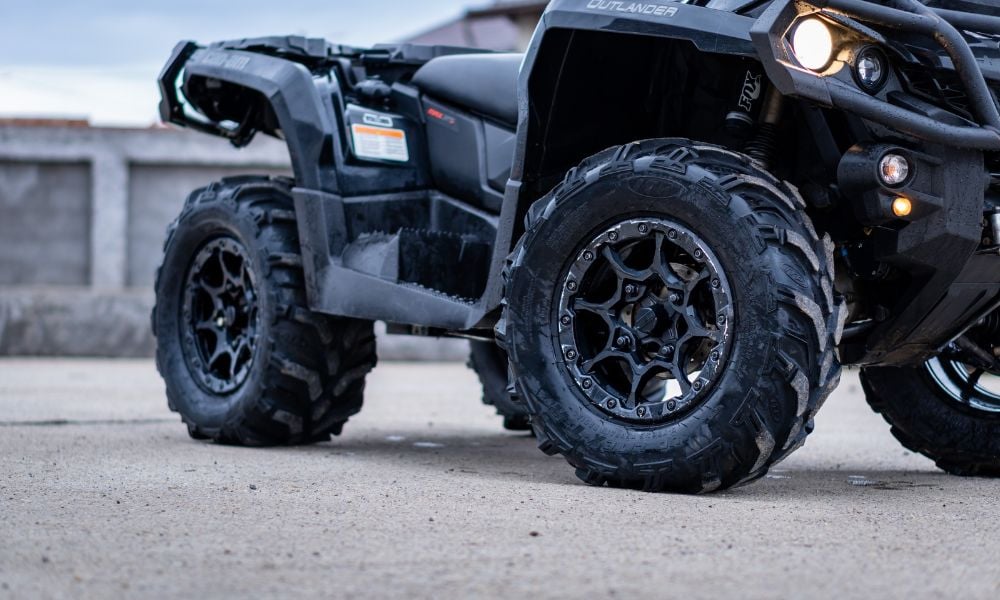
What happened: Nova Scotia’s regulator approved new rate tables letting two Allstate-family insurers cover ATVs up to $100,000 and replaced a coverage refusal rule with a minimum deductible.
Who’s involved: Pembridge Insurance Company, Allstate Insurance Company of Canada, Nova Scotia Regulatory and Appeals Board.
What’s at stake: ATV coverage extended from $50,000 to $100,000 CAD, and a shift from outright refusal to a $2,000 minimum deductible for claims-heavy vehicles.
Why it matters: Underwriters in Nova Scotia can no longer refuse comprehensive coverage over not-at-fault claims - they have to price the risk instead.
Where it stands: Approved. Effective December 10, 2026, for new business; January 10, 2027, for renewals.
Nova Scotia just approved ATV coverage up to $100,000 for two Allstate-family insurers - and changed the rules on when they can say no.
The Nova Scotia Regulatory and Appeals Board signed off on applications from Pembridge Insurance Company and its parent, Allstate Insurance Company of Canada, to update their rates and risk-classification systems for miscellaneous vehicles. The decision landed November 17, 2026.
Both companies previously had ATV rate tables capped at $50,000 CAD. They asked to extend them to $100,000. The problem: neither had offered coverage above that mark before, so there was no claims history to work with.
Their fix was to peg pricing above $50,000 to Facility Association rates - the shared industry benchmark insurers fall back on when their own data is too thin. The Board approved the extension. No existing policyholders will see a rate change.
The bigger shift is in how the companies handle vehicles with multiple comprehensive claims.
Both had a standing rule: refuse comprehensive coverage for any vehicle with two or more comprehensive losses in three years, or three or more in six years. Glass claims did not count.
Nova Scotia’s regulations treat comprehensive claims as not-at-fault. And the province does not allow insurers to decline coverage because of not-at-fault claims.
So the companies swapped the refusal for a price signal. Instead of declining, they will now require a minimum $2,000 deductible on collision, comprehensive, and related coverages for vehicles that hit those same claims thresholds. The companies said the approach matches what other insurers in the province already do.
Base rates across all miscellaneous vehicle classes are unchanged. The companies backed the hold-steady position with premium comparisons against the wider industry.
The Board confirmed both companies remain financially sound. Each must file updated insurance manuals within 30 days. Changes take effect December 10, 2026, for new business and January 10, 2027, for renewals. The next mandatory rate filing for miscellaneous vehicles is due August 1, 2028.
For underwriters writing recreational vehicle lines in Atlantic Canada, the decision draws a clear line: refusing comprehensive coverage over claims frequency is no longer an option. Pricing the risk through deductibles is.
The decision was issued by the Nova Scotia Regulatory and Appeals Board on November 17, 2026. It reflects the Board’s approval of both applications and does not involve any disputed facts or contested claims.