What happened: A tribunal set the dollar amount a crash survivor is owed for home care, then found none of it is payable yet.
Who's involved: Definity Insurance Company and a catastrophically impaired accident benefits claimant.
What's at stake: $3,028.54 a month in attendant care benefits, retroactive to September 26, 2022.
Why it matters: The decision spells out how insurers should calculate attendant-care payments, and shows unpaid family care can still block a payout.
Where it stands: Decided by the Licence Appeal Tribunal on September 22, 2026; the decision doesn't mention an appeal.
A pedestrian who was run over crossing a crosswalk just won a years-long fight over her care costs - and still won't see a cent.
The accident happened in August 2016, when a right-turning vehicle struck her in a marked crosswalk and ran over both of her legs. She fractured her left ankle and foot, suffered a degloving injury, and needed surgery. Definity Insurance Company - part of the group that also includes Economical and Sonnet - later confirmed she was catastrophically impaired, the most serious injury classification under Ontario's auto insurance rules.
The fight that just wrapped up at Ontario's Licence Appeal Tribunal wasn't about whether she needed home care. It was about how to price it.
At the center of the dispute is a 2021 court ruling, Malitskiy v. Unica Insurance Inc., that changed how insurers are supposed to price monthly attendant-care benefits. An adjudicator had already ordered Definity to pay the full $3,028.54 a month her occupational therapist recommended. Then a second look at that decision found it hadn't applied the 2021 ruling properly, so the file came back for another pass - this time on the dollar figure alone.
That second pass covered one thing only: the dollar amount, measured against the 2021 ruling. Everything else from the original decision stood.
Each side brought its own occupational therapist's assessment of how much help she needs - and the two numbers couldn't have been further apart. Her therapist recommended roughly 1,016 minutes a week of personal care, another 1,884 minutes for hygiene and safety support, and 396 minutes for more complex tasks like bathing and medication. Run through the hourly rates on the government's standard care-assessment form - known in the industry as a Form 1 - that works out to the $3,028.54 a month she was seeking.
The insurer's therapist, assessing the same woman, proposed no complex-care hours at all and landed on $880.77.
The adjudicator sided with the claimant's assessor. The insurer's therapist had focused on what she could physically do - dress herself, wash her hair seated on a stool, walk independently. What that assessment missed, the adjudicator found, was her mental health: diagnosed PTSD, severe depression, and reported suicidal ideation that left her without the motivation to do those same tasks on her own.
A psychiatric report on file put it plainly: she "has difficulties with motivation for these activities." That line did real work in the decision.
For adjusters assessing catastrophic claims, the lesson is specific: a functional-ability assessment that ignores psychological barriers to self-care can understate what a claimant needs - and lose on review.
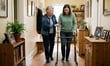
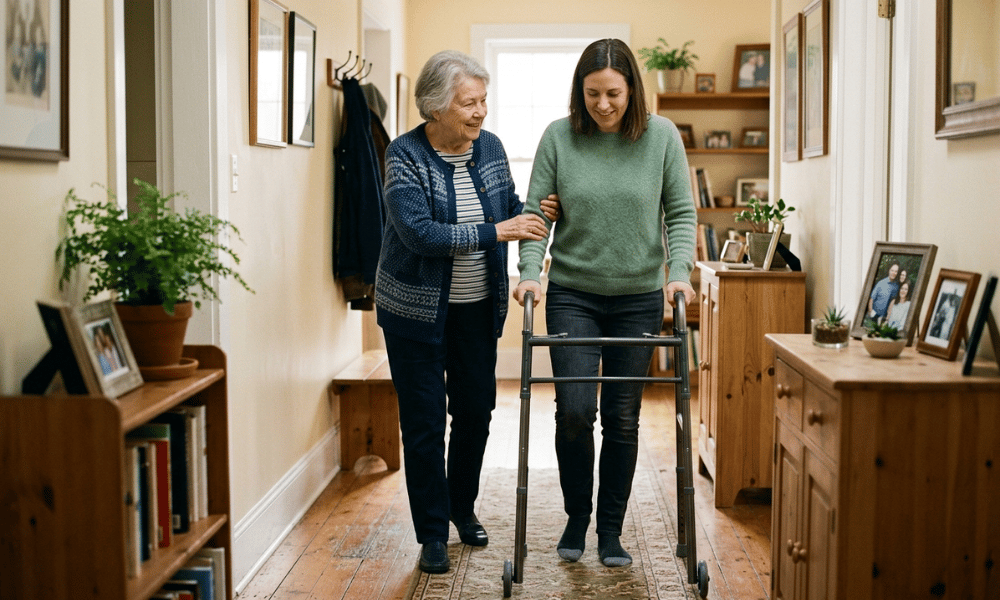
Winning that argument, though, didn't mean getting paid. Under Ontario's rules, attendant-care benefits are only payable once they've actually been "incurred" - meaning someone provided the care and was paid for it, promised payment, or is legally owed money for it. If a family member provides that care for free, the insurer only has to pay for whatever income or opportunity that family member actually gave up to do it.
In this case, the claimant's mother had been her primary caregiver. But no evidence was filed showing what income or opportunity the mother gave up to provide that care. Without that evidence, the tribunal found, there was simply nothing to put a number on - and nothing to pay.
The number was right. The paperwork wasn't.
The tribunal's final order left the claimant in an unusual spot: entitled to $3,028.54 a month going back to September 2022, and owed none of it - for now.
A strong occupational therapy report can win the dollar-amount argument. It does nothing for the payment one - family caregivers still need their own proof of lost income before either turns into an actual cheque.