Durham Regional Police has exposed a network of internationally connected criminal groups that have been travelling to Canada on legitimate visas to deliberately defraud insurance companies through staged collisions, vehicle financing fraud and coordinated false claims schemes across the Greater Toronto Area.
Project Jetsetter, announced on June 5, 2026, is the result of more than nine separate investigations conducted since 2019 by the DRPS Financial Crimes Unit, involving over 5,000 investigative hours. According to a report from CityNews Toronto, the initiative tracked more than 200 incidents tied to criminal tourism, resulting in more than $2.61 million in confirmed financial losses in Durham Region alone, with 46 individuals arrested on a combined 1,442 criminal charges and 164 suspects remaining wanted.
Detective Brad Chapman confirmed that the majority of suspects identified are from Romania, with a smaller number from India.
"They travel quite frequently from jurisdiction to jurisdiction, they come here, they commit the criminal offences, and a lot of times they leave the country before we can identify who they are," he said.
Durham Police Chief Peter Moreira added that in many cases criminals return home, change their names, obtain new travel documents and re-enter Canada to commit similar offences. "By the time we uncover who they are and begin to track them down, they've left the country without our knowledge," he said.
According to the report, the insurance-related schemes uncovered by Project Jetsetter center on staged collisions, vehicle purchasing scams and vehicle financing fraud, all designed to generate fraudulent insurance payouts at scale. Police also identified a so-called "dirty oil scam," in which suspects contact people selling vehicles, deliberately damage the car during a test drive or viewing, then use the damage to negotiate a lower purchase price before filing an inflated insurance claim.
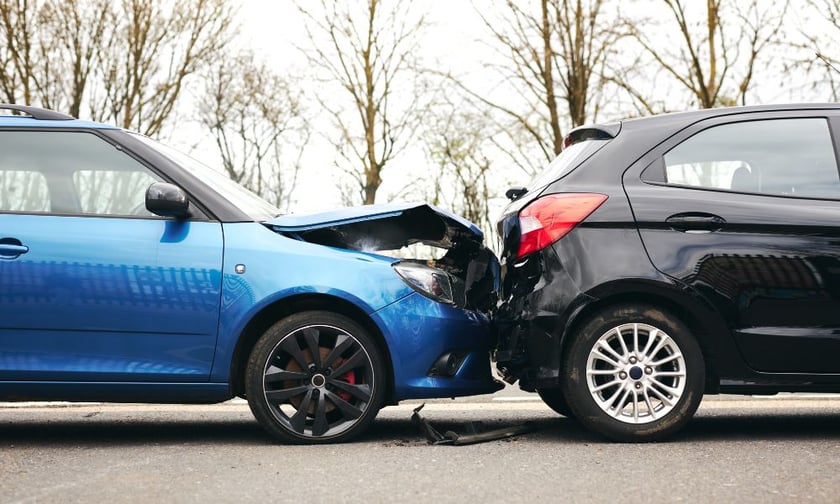
Staged collisions involve criminal groups making claims on crashes that are either intentionally caused or entirely fabricated.
Bryan Gast, vice president of investigative services at Equite Association, described the model plainly: "It can involve the tow companies, the medical facilities, the paralegals, the body shops, the car rental companies, all working together. And it all starts with a tow," he said.
Individual claims of this type generate payouts across multiple lines simultaneously, covering physical damage, bodily injury and legal expenses. CANATICS has reported that a single staged collision can result in more than $100,000 in fraudulent payouts.
The scale of the problem in the GTA is accelerating sharply. The number of staged collisions rose nearly 400% in 2025 compared to the prior year, according to Aviva Canada.
"I think it just tells you that the money is there to be made," said Aviva senior fraud leader Mike Cardillo. "One of the challenges that we're facing is that they're getting very sophisticated."
Equite Association estimated that insurance crime costs Canada between $3 billion and $5 billion annually, with consequences that extend beyond the insurance sector to burden law enforcement, courts and the healthcare system. In Ontario alone, insurance fraud is estimated to cost the industry approximately $1.3 billion a year, with those costs ultimately passed on to honest policyholders through higher premiums.
Ontario's regulator has moved to address the data gap that has historically made fraud harder to track and prosecute. In June 2025, Ontario's Financial Services Regulatory Authority approved a new Fraud Reporting Service Rule requiring all automobile insurers in the province to submit detailed information about auto insurance fraud to FSRA on an ongoing basis. The rule is designed to help insurers and regulators identify fraud patterns, target high-risk areas and build the evidential base needed for prosecutions.
Project Jetsetter is a reminder that the most damaging fraud is not opportunistic but structural. Unlike single-event catastrophes, staged collision fraud is embedded persistently across insurer loss ratios, compounding quietly across thousands of claims each year, the report said.
DRPS continues to work with the RCMP to track offenders across jurisdictions, share intelligence and disrupt these networks at both the local and national level, the report said.