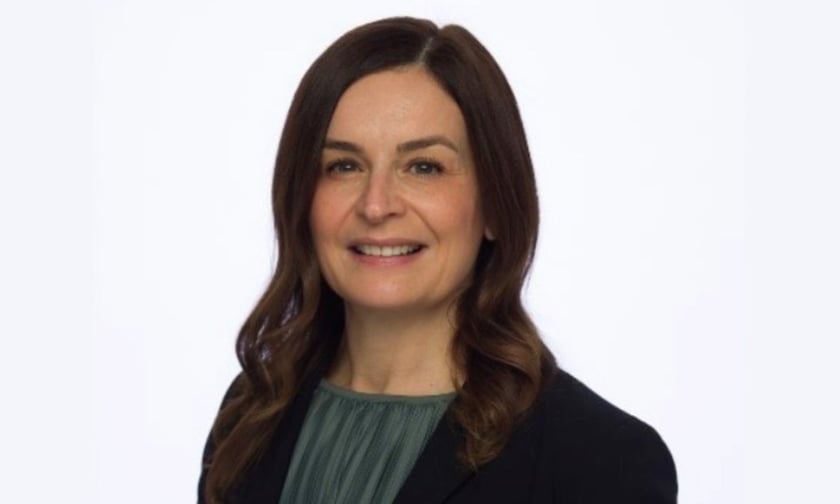
Insurers in the commercial property and liability space are not underwriting policies differently because of the CUSMA trade review, according to Roberta Tasson (pictured), senior vice-president of diversified industries in the complex risk unit at Hub International. Any impact, she said, comes through indirectly rather than through the review itself.
"Insurers overall in the commercial property and liability space aren't underwriting policies differently because of a trade review," Tasson said. Where it does show up, she said, is in the underlying numbers: if a client's supply chain becomes more expensive or has to shift, or their property and business interruption values change as a result, that flows through to the premium as a pass-through cost rather than a direct repricing decision.
Certain sectors will feel that pass-through more than others, she said, naming auto, steel, aluminum and lumber as the segments most exposed.
Asked what changes if the uncertainty continues for months or years, Tasson reframed the question away from coverage entirely.
"On the commercial side, it's not really a coverage crisis, it's more of a valuation problem," she said.
Her answer traced a three-part chain through the market, starting with the intermediary. Brokers should be reaching out proactively to clients, she said, to check whether the tariff environment is affecting their supply chain or impacting the values they have insured. That information then flows to the insurance side, where she expects underwriters to become more tuned in to supply chain specifics, asking sharper questions about where clients source from. That level of scrutiny, she said, is coming down the pipeline.
The third link is the renewal exercise itself. Brokers already review all of a client's key exposures and values as standard practice, Tasson said, including property values and business interruption figures. What changes now is where the attention goes: beyond those headline numbers, she expects more time spent on the coverage extensions and sub-limits built into policies, provisions that are easy to overlook but need to align with a client's actual exposure just as much as the primary values do.
"We want to bring and raise more attention to those figures, to make sure that they align," she said. "So all of the values, whether it's the actual real exposure or also all the extensions and supplements, align with our clients' exposure."
To illustrate the mechanics, Tasson described a hypothetical client in the auto or lumber sector. Finished product in those industries is typically insured based on selling price, she said, and if tariffs push those prices higher, the insured value needs to keep pace with the client's increased exposure. Otherwise, she said, a gap opens between what's covered and what the business is actually exposed to.
"If the client is not in alignment with their insurance policy and keeping those values current, they could effectively be underinsured," Tasson said.
She pointed to a second, related exposure: contingent business interruption tied to supply chain concentration. Where a client previously drew from multiple suppliers, the tariff environment may now leave them reliant on a single key source, she said – meaning a disruption at that one supplier could translate directly into lost revenue for the client. Reviewing that kind of exposure, in her view, can't wait for an annual renewal cycle; she recommended assessments at minimum quarterly to semi-annually for high-exposure clients in the affected sectors, rather than a one-time-a-year review.
Tasson said a wait-and-see posture is not advisable given how unresolved the situation remains. She recommended that clients revisit their property values and business interruption limits now, so they reflect current and ongoing disruption costs rather than assumptions set before the tariff environment took hold.
"The wait-and-see approach is not going to work, because, at this point in time, we don't know when this is going to be resolved and when it will become clearer," she said.
For Tasson, the tariff question ultimately points in the wrong direction.
"The businesses that may get hurt are not the ones that are exposed to tariffs, but they're the ones that haven't maybe kept abreast of their true exposure," Tasson said. "That's where working with a specialized broker and risk management advisor is helpful to these clients, to make sure they're proactive rather than reactive."