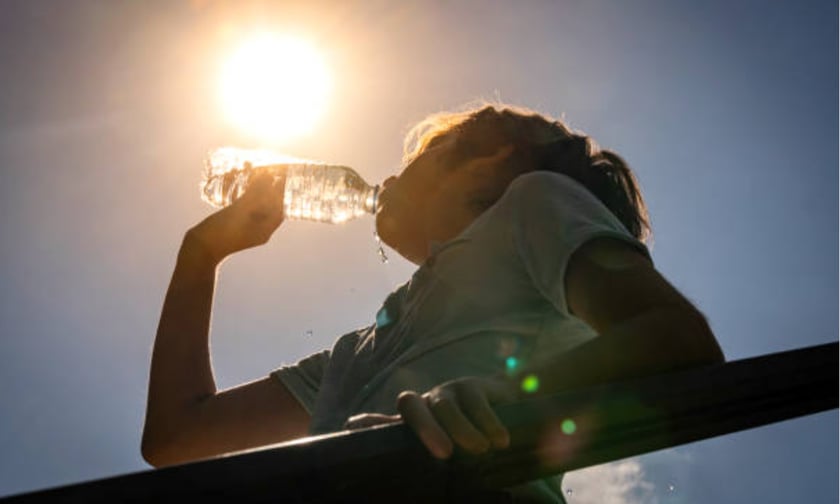
A stiflingly hot weekend that set multiple temperature records across Manitoba and forced the cancellation of outdoor events is the latest example of a risk Canadian insurers said they can no longer treat as occasional: extreme heat cutting across event cancellation, property, liability, workers' compensation and agriculture lines at the same time.
The dangerous conditions prompted Rainbow Stage to cancel what was to be the final performance of Jesus Christ Superstar, with the outdoor theatre company saying it was not safe to proceed with a performance in its covered but open-air venue. Ticket holders are being offered refunds or transfers to its upcoming run of Legally Blonde The Musical. The Corydon BIZ separately canceled its weekly Open Corydon street party, citing the extreme heat warning and radiant heat off the pavement as a risk to vendors, volunteers and attendees.
For event organizers, weather remains the most common trigger for event cancellation insurance claims, and extreme heat is increasingly part of that exposure alongside storms and other named perils. Coverage for outdoor events can extend beyond lost revenue to the unforeseen costs of keeping an event safely running, such as additional water supplies or shelter when heat threatens to shut things down. Two cancellations in a single weekend in one city is a small sample, but it illustrates how quickly a heat warning can translate into cancellation claims across a market's live events calendar.
The Manitoba event is unlikely to generate headline insured losses on the scale of a major flood or windstorm. But it lands amid a broader pattern insurers are tracking closely.
Reinsurance data presented at the Insurance Bureau of Canada's 2026 InSight Summit showed that climate-related secondary perils, the category that includes heat, drought, severe convective storms and wildfire, now account for 50% to 55% of Canada's total natural catastrophe loss pool, up from around 30% in the first decade of the 2000s, even as earthquake remains the country's single largest peak risk.
That shift matters for how insurers model and reserve for aggregate exposure, since secondary perils are typically more frequent and geographically dispersed than the peak perils that have traditionally driven catastrophe modeling.
Extreme heat can also raise medical, life and workers' compensation claims, particularly for outdoor and vulnerable populations, while increasing liability exposure for employers and institutions that fail to adequately protect people from heat-related harm.
A wave of "heat hangover" cases, lingering symptoms that fall between a clear reportable injury and ordinary absence, has drawn fresh attention following earlier heat events this summer, complicating how insurers and employers adjudicate claims.
Amendments to the Canada Occupational Health and Safety Regulations that took effect in February 2026 introduced formal thermal stress requirements for federally regulated workplaces, including heat threshold values and humidex monitoring, giving employers and their insurers a more defined compliance standard to work against when a claim does arise.
Manitoba's position as a major agricultural province adds another dimension to the risk. Excessive heat is an insurable peril under AgriInsurance, the crop insurance program administered by the Manitoba Agricultural Services Corporation (MASC) and cost-shared by the federal and provincial governments.
MASC expects to provide $4.3 billion in coverage across 9.8 million crop acres in 2026, with more than 90% of the province's annual crop acres enrolled. While this week's heat wave has not yet been linked to specific claims, sustained high temperatures during the growing season are among the perils MASC's coverage is designed to address alongside drought, excess moisture and hail, and a program with that level of participation gives Manitoba producers meaningfully more protection against a prolonged heat event than farmers in less comprehensively insured regions.
The exposure described above stems from a genuinely record-setting event. Seven Manitoba communities set new temperature records on Sunday and four others tied theirs, according to Environment and Climate Change Canada, with McCreary reaching 36.5°C and Winnipeg hitting 35.3°C, a humidex of 48. An orange-level heat warning remains in effect across southern Manitoba, with temperatures expected to stay in the mid-30s into Monday before easing later in the week. The City of Winnipeg has opened cooling centers, including leisure centers, libraries and nine hydration stations, to help residents manage the immediate risk.
Taken on its own, this week's heat wave is a local weather story. But set against rising event cancellation activity, a growing share of secondary-peril catastrophe losses, tightening workplace heat regulations and a crop insurance program built to absorb exactly this kind of exposure, it reflects a risk landscape Canadian insurers are increasingly underwriting for as a matter of course, rather than treating as an occasional anomaly.