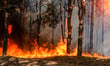
Toronto is under an air quality warning as smoke from wildfires burning in northwestern Ontario drifts south into the region, with Environment Canada cautioning that poor air quality and reduced visibility could persist into Thursday.
The yellow-level warning, issued for the city on Wednesday, comes as Toronto ranked among the worst major cities in the world for air quality – the city sat third globally as of about 6 a.m. Wednesday, according to IQAir, which tracks global air quality data. Ontario's own monitoring put downtown Toronto's Air Quality Health Index at 9 out of 10 – high risk – as of 6 a.m., with residents advised to reduce or reschedule strenuous outdoor activities.
Environment Canada is advising people to limit time outdoors and consider reducing or rescheduling outdoor sports, activities and events, warning that health risks increase as smoke levels rise. The smoke may cause mild and common symptoms such as eye, nose and throat irritation, headaches or a mild cough, while more serious but less common symptoms include wheezing, chest pains or severe cough – with anyone who believes they are having a medical emergency urged to seek immediate medical assistance.
Those more likely to be affected include people aged 65 and older, pregnant people, infants and young children, people with existing illnesses or chronic health conditions, and people who work outdoors. The agency recommends keeping windows and doors closed as much as possible, and notes that when an extreme heat event coincides with poor air quality, keeping cool should be the priority.
A heat alert remains in effect for Toronto alongside the smoke, with temperatures expected to reach 33 C on Wednesday and feel closer to 36 with humidity. The city remains under the influence of a heat dome stretching from southern Saskatchewan through Manitoba, across most of Ontario and into Quebec. The city reached a sweltering 36 C late Tuesday afternoon – approaching the highest temperature ever recorded for July 14 at Pearson airport, 36.7 C – and Wednesday is set to be the 13th day this year above 30 C in Toronto, nearly double the seven days the city would usually record by mid-July, according to Environment Canada climatologist emeritus Dave Phillips.
For those who must spend time outdoors, Environment Canada says a well-constructed, well-fitting and properly worn respirator-type mask, such as a NIOSH-certified N95 or equivalent, can reduce exposure to fine particles in the smoke, though risks to health can remain. The agency also advises protecting indoor air by using the highest-quality air filter a ventilation system can handle, or a certified portable air cleaner capable of filtering fine particles, and checking in on neighbours and others more likely to be affected.
The smoke has been carried southeast by a strong jet stream from hundreds of active wildfires, with yellow air quality warnings in place across southern Ontario, including the Greater Toronto Area, and parts of Quebec – and smoky skies expected to linger through Wednesday and into early Thursday.