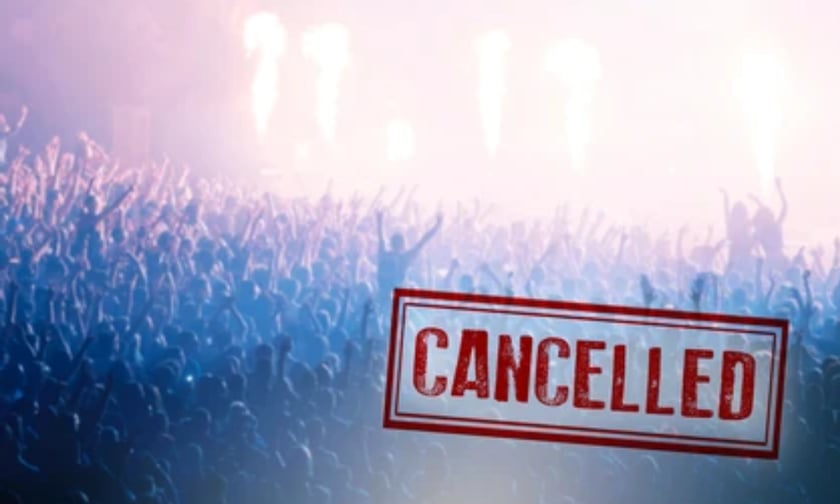
Wildfire smoke drifting from northern Ontario forced the cancellation of Rock the Park's first two nights in London, Ontario last week, part of a growing wave of outdoor event cancellations across the province this summer driven by extreme heat, storm warnings and deteriorating air quality.
The London music festival joined a lengthening list of casualties. Toronto's FIFA Fan Festival and Nathan Phillips Square watch parties were cancelled over air quality concerns, Hamilton Fringe Fest called off a number of Friday night events, and Niagara Parks paused its nightly fireworks show until conditions improve. Earlier in the month, East London's Canada Day celebrations were cancelled due to extreme heat, and Ottawa's federally run Canada Day evening show and fireworks at LeBreton Flats were washed out by torrential rain and flooding on July 1.
Unlike the smaller, privately organized festivals affected elsewhere in the province, government-run events like Ottawa's are typically absorbed within public budgets rather than covered by commercial cancellation policies, illustrating that the insurance gap discussed below applies most acutely to independent organizers rather than publicly funded programming.
Cory Crossman, director of the London Music Office, said cancellations tied to unpredictable weather have become an increasing trend for live events.
Organizers weigh the impact on artists, crew and attendees trying to reach a venue before making what he called a difficult decision, one his office has now faced twice this season for its weekly City of Music concert series, first due to tornado warnings and more recently due to wildfire smoke.
"I wouldn't necessarily say it's a quick decision. A lot of thought goes into it," he said.
The cancellations carry a financial cost beyond the events themselves. Pablo Tovar, who runs entertainment company Stereo Caliente and organizes downtown London's Colombian Gastronomy Festival, cancelled the tenth-anniversary event's opening day due to smoke, a decision that followed more than six months of planning.
More than 40 food vendors still felt the economic impact of losing a full day of sales, even though the festival's remaining two days went ahead as planned. It is not publicly known whether the festival, or Rock the Park, carried event cancellation coverage for the losses involved, though the type of exposure both faced, lost vendor and drink ticket revenue tied to a specific day, is precisely what such policies are designed to address.
The ripple effects extend to charities that depend on festival revenue. Rock the Park supports several local organizations through its drink ticket sales, including Big Brothers Big Sisters of London and Area. Interim executive director Lisa McIntosh said she supported the decision to cancel the festival's second night but expects it will affect the charity's overall funding for the year, adding that the organization is now looking for ways to make up the anticipated shortfall.
The disruption highlights a coverage gap that Canada's event insurance market has only recently begun to address.
Michael McDermott, head of sports, entertainment and contingency at HDI Global Speciality SE Canada, told Insurance Business earlier this year that event cancellation insurance remains underused across the Canadian market even as wildfire smoke and deteriorating air quality shift from a background concern to a central underwriting factor for outdoor events.
McDermott said Canada's Air Quality Health Index, which measures conditions on a scale from 1 to above 10, has become a core input for underwriters pricing outdoor sports, concerts and festivals, particularly as wildfire activity has increased across Ontario and the rest of the country in recent years.
That increase shows up clearly in the broader loss data. Insurance Bureau of Canada and CatIQ figures show insured wildfire losses climbed more than 1,000% between 2016 and 2025, to $8.1 billion, compared with $734 million in the decade prior, with the country experiencing 16 catastrophic wildfire events in the more recent period compared with just two in the decade before.
While most of that figure reflects direct property damage rather than event cancellations specifically, Insurance Business has separately reported that much of the broader economic disruption tied to wildfire smoke, including lost wages and interrupted business income for smaller operators, remains only partially insured or entirely uninsured under standard policies.
For brokers and underwriters, this summer's wave of cancellations is likely to sharpen demand for event cancellation and contingent business interruption coverage tailored specifically to air quality triggers, rather than the more traditional weather perils like rain or wind that such policies have historically been built around.
Smaller organizers, community groups and charities that rely on festival revenue, the kind of stakeholders most exposed in stories like Big Brothers Big Sisters' expected shortfall, are often the least likely to carry adequate cancellation coverage or to fully understand what it can protect against.
As wildfire smoke shifts from an occasional disruption to a recurring feature of the Canadian summer, and as insured wildfire losses climb nationally, brokers have a growing opportunity to bring these products, and the risk awareness that goes with them, to a segment of the market that has largely gone without.