A driver who blamed a heated roadside exchange for reactivating his PTSD has lost his bid for accident benefits from CAA Insurance.
The Licence Appeal Tribunal ruled that the applicant was never involved in an "accident" as legally defined, dismissing his claim in a decision released August 26, 2026.
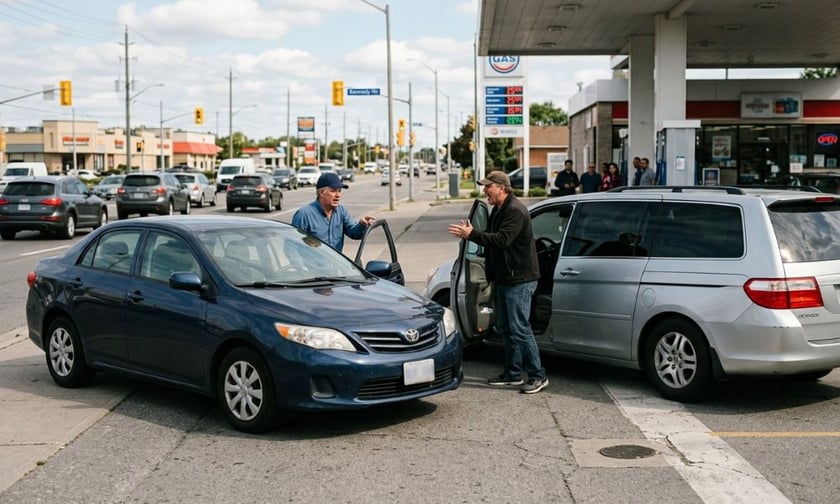
The applicant said that on April 27, 2023, another driver prevented him from merging into a turn lane on Kennedy Road as he tried to turn onto Finch Avenue. He testified the other man got out of his car, directed him to a nearby gas station, and continued the confrontation there. No vehicles ever made contact, and no one suffered a physical injury. The applicant said the exchange triggered a pre-existing case of post-traumatic stress disorder, leaving him with sleep problems, nightmares, anxiety and depression. He applied for statutory accident benefits in February 2025, 22 months after the incident.
CAA Insurance denied the claim, arguing the incident did not meet the legal definition of an accident under the Statutory Accident Benefits Schedule. Adjudicator Aric Bhargava agreed.
To qualify as an accident, an incident must pass two tests - it must arise from the ordinary use of a vehicle, and that use must directly cause the impairment. Bhargava found the applicant's case failed the first test. Once the other driver stepped out of his vehicle to confront him, and again at the gas station, the encounter became a verbal dispute rather than an ordinary driving activity - and it was that dispute, not the operation of either vehicle, that caused the applicant's psychological injuries.
The adjudicator also found that even if the incident had passed the first test, it would have failed the second. The other driver's decision to exit his vehicle and engage in a confrontation counted as an intervening act that broke any chain of causation running from vehicle use to the applicant's condition.
The decision pointed to an appellate finding that verbal or feared assaults fall outside a vehicle's ordinary use, and to a similar tribunal case where another driver kicked and punched a vehicle without ever touching its occupants. Bhargava distinguished cases the applicant cited involving physical contact - a driver struck with a car door before being assaulted, and a claimant shot while sitting in a vehicle - finding this case lacked equivalent contact.
Because the applicant was found not to have been in an accident, the tribunal did not need to decide a related bid for coverage of a $3,645.80 psychological assessment, or a separate argument that he had missed the deadline to notify CAA of his claim.
CAA sought $1,000 in costs, arguing the applicant failed to disclose a driver's true identity. The applicant sought $782.50 in costs of his own, arguing CAA's conduct had been unreasonable. Bhargava rejected both requests, finding neither side had met the high bar of unreasonable, frivolous, vexatious or bad-faith conduct. The application was dismissed.