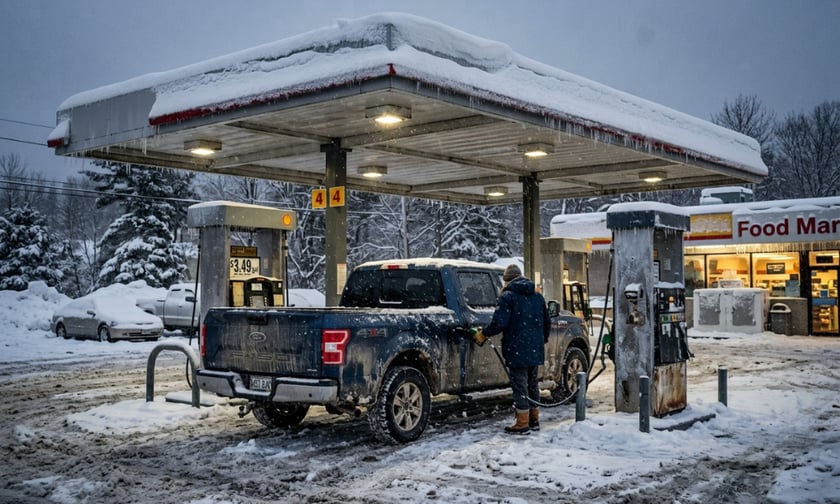
A tribunal has ruled that snow falling from a gas station canopy onto a fuelling customer counts as an accident under Ontario's auto insurance schedule.
Belair Insurance Company Inc. denied a claimant's statutory accident benefits after ice and snow fell from a gas station canopy on March 30, 2025, while he was fuelling his vehicle. He reported physical injuries to his neck and right shoulder along with psychological impairments including anxiety, low mood and sleep difficulties. Belair argued the incident did not meet the Statutory Accident Benefits Schedule's definition of an accident, pointing to emergency room records showing the claimant had injured his right shoulder in an unrelated trip-and-fall over a fence a week earlier.
The Ontario Licence Appeal Tribunal sided with the claimant on this preliminary issue. Vice-Chair Trina Morissette found sufficient evidence that he sustained impairments from the incident, including psychological effects, and that the snowfall may have aggravated the pre-existing shoulder injury. A witness interviewed separately by investigators said the snow narrowly missed the claimant, though she added she would not have been surprised if fragments of ice struck his arm.
Morissette applied the two-part legal test tribunals use to determine whether an incident qualifies as an accident: whether it arose from the use or operation of an automobile, and whether that use directly caused the impairment. Both sides agreed that fuelling a vehicle satisfies the first branch. On causation, Morissette concluded the claimant would not have been injured but for refuelling his car, and that no intervening event broke the chain of causation.
Belair argued the snowfall was an unpredictable event separate from any automobile use. Morissette agreed that prior tribunal decisions the claimant cited, involving insureds who slipped on ice, were factually different from a canopy snowfall, but determined that snow and ice accumulating on a gas station canopy is still a foreseeable risk of operating a vehicle during Ontario winters. She called the snowfall a "fortuitous event" rather than an intervening one.
On the question of which factor most directly caused the injuries, Belair argued that the snowfall itself - not the vehicle's use - was the dominant cause. The claimant pointed to a case where a driver was found to have still been using his trailer when he fell from it while cleaning it, with no meaningful gap between that use and the fall. Morissette accepted the claimant's position, finding no lapse between the fuelling and the snowfall moments later.
With the accident question resolved, the tribunal ordered the dispute to proceed to a hearing on the substantive benefits claims, scheduled for October 7, 2026. The preliminary ruling does not decide whether the claimant is entitled to the benefits themselves - only that Belair must defend the claim on its merits.