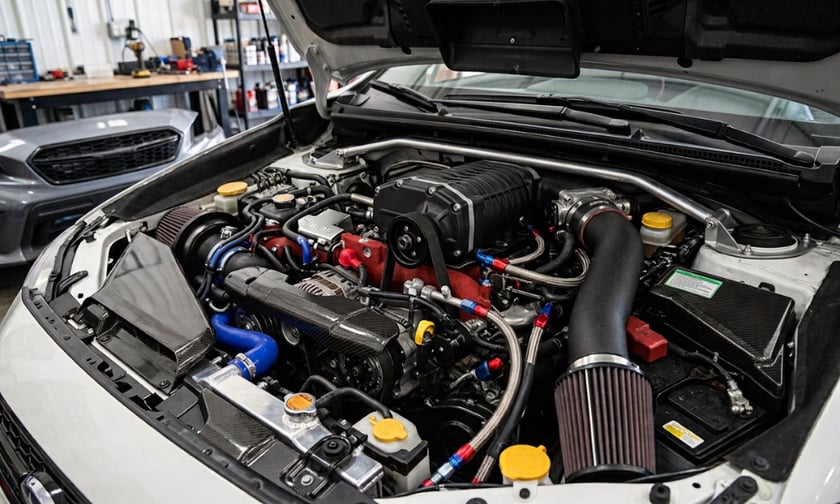
An Ontario court has capped an insurer's payout at the statutory minimum after a policyholder failed to report performance upgrades to his sports car.
In a decision released August 31, 2026, the Ontario Superior Court of Justice found that Aviva Insurance Company of Canada does not owe a duty to defend or indemnify a deceased policyholder's estate beyond $200,000 in four lawsuits arising from a fatal 2018 crash, cutting Aviva's exposure from the $2 million liability limit in the policy.
The policyholder held a $2 million auto policy with Aviva covering his 2011 Chevrolet Corvette. After Aviva renewed the policy in September 2017, he added a supercharger, high-flow exhaust headers, a methanol injection kit and drag radial tires between March and July 2018, spending $21,345 - about 55% of the car's purchase price - without telling his broker or Aviva. On August 4, 2018, while driving the modified Corvette at high speed, he caused a collision that killed three people and seriously injured two others. He was later convicted of three counts of dangerous driving causing death.
Aviva argued the modifications amounted to a material change in risk under the Insurance Act and its own underwriting rules, which bar coverage for any vehicle altered to enhance performance. Its investigation found the changes could raise the Corvette's horsepower from a stock 430 to as much as 700.
Several accident victims who intervened in the case argued Aviva had a duty to explain what would count as a material change, and that the insurer needed to show the modifications caused the crash. Justice L. Shaw rejected both positions, finding that materiality is judged from the insurer's standpoint rather than the policyholder's, and that a causal link between an undisclosed change and a loss is not required to establish a breach. A fact is material, the court noted, if it "would influence a prudent insurer in deciding whether to issue the policy."
The court also found the policyholder's broker had no obligation to warn him that future modifications had to be reported, since the standard Ontario auto policy and the Insurance Act's statutory conditions already require policyholders to disclose changes in risk on their own initiative.
With Aviva's exposure capped at the statutory minimum, two other insurers named as intervenors, Definity Financial Corporation and Security National Insurance Company, face a larger share of the claims through the uninsured and underinsured motorist coverage they provide to the accident victims.
Justice Shaw acknowledged the ruling could affect how fully the victims are compensated, but found that the policyholder's undisclosed modifications were why Aviva's obligation was limited to the statutory minimum.