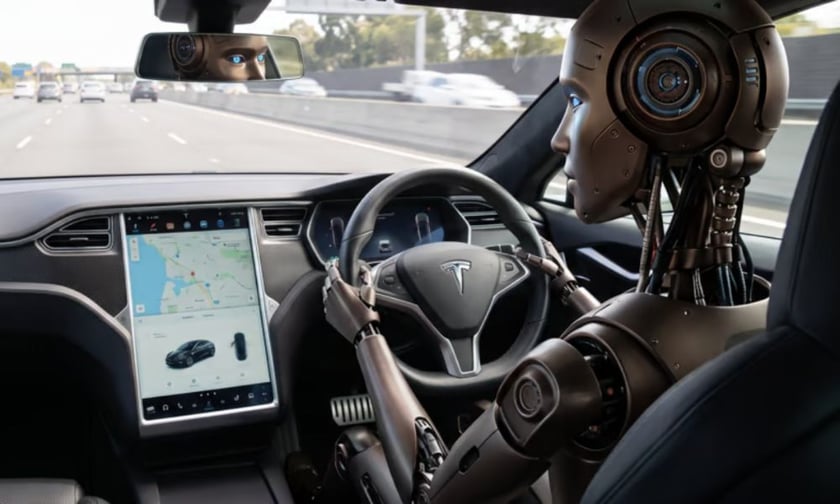
Zurich has just become the first insurer in Australia (and only the second worldwide) to price Tesla's Full Self-Driving (Supervised) technology into car insurance, treating owners who use it as lower-risk drivers based on its own early claims data. It's the kind of headline that tends to make UK brokers ask the obvious question: could this happen here?
Not yet, and not any time soon, it would appear. FSD (Supervised) remains switched off for British roads. Tesla will happily sell UK customers the underlying Full Self-Driving Capability package – a one-off £6,800, on top of the price of the car – but the advanced city-driving and automatic lane-change features stay locked until UK regulators sign off. Buyers are, in effect, paying now for software they can't legally switch on yet.
The technical holdup is a type-approval one. The Netherlands' RDW granted Europe's first approval for the system in April 2026 under the UN's Driver Control Assistance Systems regulation, and Tesla is understood to be pushing the UK's Vehicle Certification Agency to recognise that approval rather than start a review from scratch.
Industry trackers currently peg a realistic UK launch at late 2026 or early 2027, though Tesla has not yet formally lodged an application, and past estimates for FSD's UK arrival have slipped before.
Even once FSD does arrive, a straight copy of Zurich's Australian approach is unlikely – because the UK's liability model for automated driving already looks different. Since the Automated and Electric Vehicles Act 2018, any vehicle formally listed by the Secretary of State as automated must be covered by a single insurance policy that pays out regardless of whether a human or the software was in control at the time, with the insurer then able to recover costs from the manufacturer if the technology was at fault.
Zurich's Australian discount, by contrast, applies to a Level 2 system where the human driver remains legally responsible throughout.
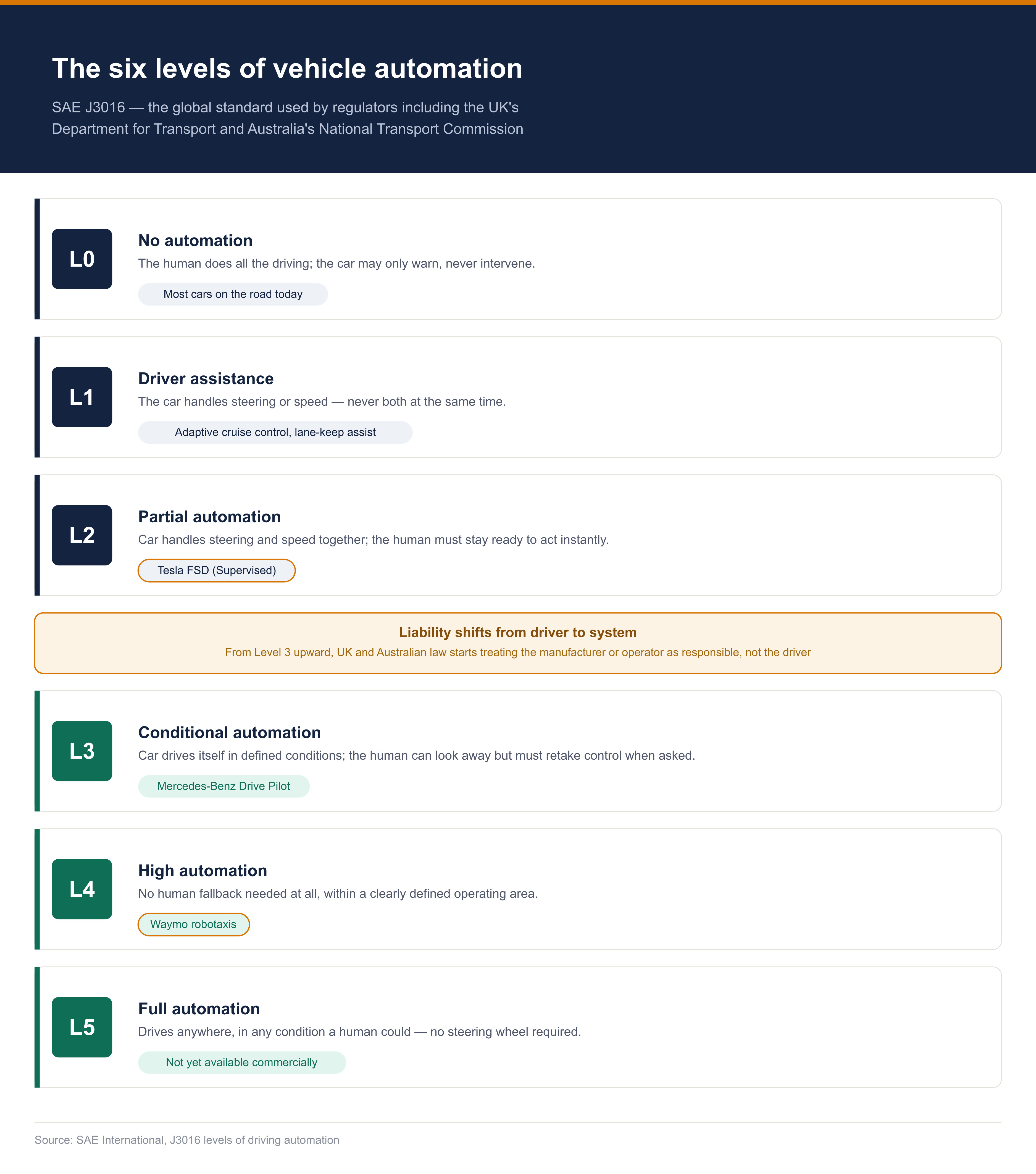
The Automated Vehicles Act 2024 creates two new categories of legally responsible party for genuinely driverless operation – an Authorised Self-Driving Entity, generally the manufacturer, and a No-User-In-Charge operator for robotaxi-style services – shifting blame away from the person in the seat once a vehicle is authorised as self-driving.
The Department for Transport and the Centre for Connected and Autonomous Vehicles have spent the summer consulting on the statement of safety principles that will decide which vehicles clear that bar; the consultation closed on 9 September, with full authorisation machinery not expected until the second half of 2027. Waymo, meanwhile, has already begun robotaxi trials on London's roads this year under the No-User-In-Charge framework – arguably a more immediate insurance question for the market than any individual Tesla owner's premium.
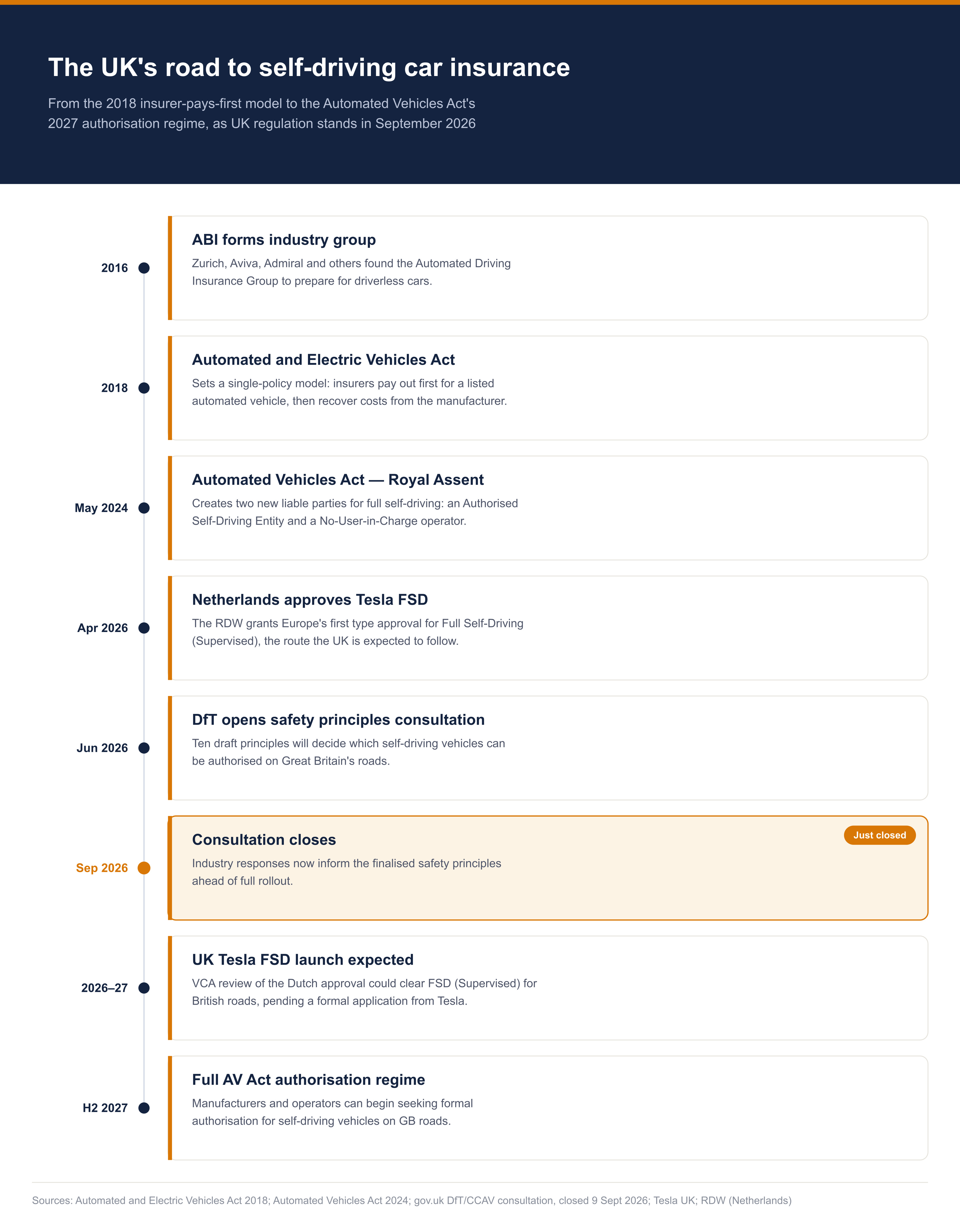
None of this is new territory for British insurers, even if the technology keeps outpacing the paperwork. Zurich itself was a founding member of the Association of British Insurers' Automated Driving Insurance Group back in 2016, alongside Aviva, Admiral, Direct Line and others, and the ABI has been engaging with government on this file for the best part of a decade.
What's changed is that the theoretical is turning practical: specialist telematics insurers such as Zego are already underwriting early-stage automated vehicle trials and fleets against the AV Act's benchmark that a self-driving system must match or beat a competent, careful human driver – a different starting point to Zurich Australia's frequency-based pricing, but aimed at the same underlying question of how much safer, if at all, the technology really is once it's out on real roads.
For UK brokers, the more useful takeaway from Zurich's Australian move may not be "watch Tesla" so much as "watch the plumbing." Australia has shown a mainstream insurer is now willing to treat a manufacturer-fitted driver-assistance feature as its own rating factor.
Whether that translates to Britain will depend less on when FSD gets its badge from the VCA, and more on how the AV Act's liability framework settles once the safety principles consultation reports back – because that will determine whether UK insurers end up pricing driver behaviour, as Zurich has done, or pricing manufacturers, as the AEV Act already points toward.