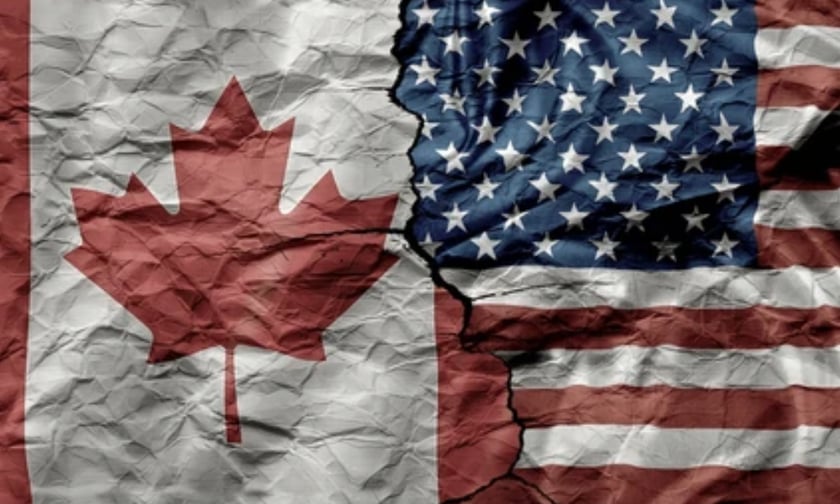
Canada's counter-tariffs on $27.6 billion of US goods took effect September 8, matching Washington's rates of 15%, 25% and 50% dollar-for-dollar across steel, aluminum, dairy, appliances, agricultural equipment, pulp and paper, as well as electronics.
The measures respond to the US imposing its own 50% tariffs on a similar value of Canadian exports after trade talks collapsed in late August.
Notably, Canada's retaliatory list doesn't directly target vehicles or auto parts, that pressure continues to come from the US side, where existing 25% tariffs on Canadian-built vehicles remain in place and President Trump has separately threatened to raise tariffs on Canadian vehicles, parts and steel to 50% starting January 1, 2027.
Reports connecting rising tariffs to auto insurance premiums are directionally accurate, but the specific numbers require some care.
Statistics Canada's Consumer Price Index showed the price of passenger vehicle parts, maintenance and repairs rose 2.9% between April 2025 and April 2026, a real, measured increase tied to tariff pressure on cross-border parts flows, since a single part can cross the Canada-US border multiple times before final assembly, with tariff cost added at each crossing.
That's a genuine and verifiable cost pressure feeding into insurer claims costs and, eventually, provincial rate filings.
Some coverage has gone further, citing figures suggesting insurance premiums could rise "up to 5%" specifically because of tariffs. That number is worth treating with real caution: it traces back to a ceiling estimate from analysis commissioned by an industry trade association, not an independently observed outcome.
"Up to 5%" is the top of a modelled range from an interested party, not a forecast that premiums will actually rise that much. The more defensible, independently measured figure remains Statistics Canada's 2.9% CPI increase in vehicle parts and repair costs, which is itself now compounding with a separate, unrelated trend: national auto insurance premiums were already up 6% year-over-year as of June 2026, with Alberta seeing a 27.6% increase driven primarily by that province's own rate reform process rather than tariffs specifically.
There's a mechanism worth flagging that existing coverage of this story hasn't fully connected: Canada's new 50% counter-tariff on US steel and aluminum could itself modestly raise Canadian collision repair costs, since auto body steel, sheet metal and structural components used in vehicle repair are internationally traded commodities, and a portion of the steel used in Canadian auto body shops originates from or is priced against US steel markets.
This would be a smaller, more indirect effect than the parts-crossing-the-border dynamic driving the CPI increase, but it's a plausible additional pressure point insurers and repair networks may need to account for as this second round of counter-tariffs works through supply chains.
For brokers advising personal and commercial auto clients, the practical takeaway is to separate three distinct, real pressures rather than treating "tariffs are raising your premium" as a single undifferentiated story - the verified 2.9% CPI increase in parts and repair costs tied to cross-border parts tariffs, the looming and much larger threat of a 50% tariff on vehicles and parts specifically that could take effect January 2027 if unresolved, and province-specific rate dynamics like Alberta's, which are being driven by regulatory reform rather than trade policy at all.
Clients asking why their premium is rising deserve an answer grounded in which of these three factors actually applies to their policy and province, rather than a single, oversimplified explanation attributing everything to the broader trade war.