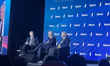
Markel Group's chairman, Steve Markel (pictured), has informed the board that he will retire from that role and will not seek re-election at the company's 2027 annual shareholder meeting, capping more than 50 years with the specialty insurer.
The board has appointed CEO Tom Gayner to the additional role of chairman, effective immediately, meaning Gayner now holds both positions simultaneously.
Markel joined the company in 1975, led its 1986 initial public offering, and has served as chairman since 2020 after earlier stints as vice chairman, executive vice president and treasurer. He will remain on the board until his current term concludes at next year's annual meeting.
"Steve's leadership, wisdom, expertise, and commitment to Markel are unmatched," said Michael O'Reilly, Markel's lead independent director and a former vice chairman and CFO at Chubb. Markel himself credited the company's culture of "a long-term orientation, an ownership mindset and a commitment to doing things the right way" as his proudest legacy.
Markel elevated Simon Wilson and Andrew Crowley to executive vice president roles back in February 2026, in a restructuring that coincided with the company's exit from reinsurance and the departure of then-chief operating officer Mike Heaton.
At the time, Gayner described the moves as reflecting the company's "ongoing evolution" and a push to simplify its structure, with Wilson and Crowley "focused on serving the operations, customers, and markets they know best," insurance and non-insurance operations respectively.
Read together, the two announcements show a company that has spent the better part of a year consolidating leadership around Gayner and two operating executives with deep, specific knowledge of Markel's insurance and non-insurance businesses respectively, rather than making an abrupt, single-event change at the top.
Alongside the chairman transition, Markel's board established a Leadership Council consisting of O'Reilly, Gayner, Wilson and Crowley, designed to formalize coordination between independent board leadership and senior management on strategy, performance and capital allocation.
For a company whose business model had long depended on Gayner's investment philosophy and a portfolio approach spanning insurance underwriting and a diverse collection of non-insurance operating businesses, the Leadership Council is a structural answer to a genuine question: how does strategic coordination happen at the board and operating level when the CEO also chairs the board and simultaneously oversees two very different business segments?
This structure is a meaningful governance signal: it institutionalizes a direct line between the board's independent oversight function and the two executives now running Markel's two largest business segments day to day, rather than routing that coordination solely through the combined chairman-CEO role.
For brokers and cedants working with Markel Insurance, Wilson's elevation to co-president while retaining direct CEO responsibility for the insurance business suggests continuity in underwriting strategy and market approach, rather than a signal of imminent change in risk appetite or capacity.
The more consequential question is how much of Gayner's own attention, now split across CEO and chairman duties simultaneously, remains available for insurance-specific strategic decisions versus the broader group-level capital allocation and Markel Ventures oversight the combined role now encompasses.
Wilson's expanded title, alongside the new Leadership Council structure, suggests Markel is building organizational capacity to ensure that attention doesn't become a bottleneck as Gayner's dual role settles in.