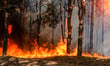
Northern Ontario is battling a rapidly escalating wildfire crisis, with active fires prompting evacuation orders, home losses, and the province asking Ottawa for emergency air support.
As of Thursday, Ontario's Natural Resources Ministry reported 176 active wildfires across the province, 134 of them in the northwest region and 62 out of control.
At least one fast-moving fire has destroyed homes and buildings on Namaygoosisagagun First Nation, also known as Collins First Nation, north of Thunder Bay, The Canadian Press reported. Winds out of the northwest, with gusts up to 40 kilometres per hour, were expected to fan the flames further and blanket the community of Armstrong in additional smoke, according to Environment Canada figures relayed by the outlet.
Evacuation orders are in effect for numerous communities, including Armstrong, Whitesand First Nation, Namaygoosisagagun First Nation, Lac des Mille Lacs First Nation, Gakijiwanong Anishinaabe Nation (Lac La Croix First Nation), and Kiashke Zaaging Anishinaabek (Gull Bay First Nation). Additional evacuated communities include Cat Lake, Ojibway Nation of Saugeen, Eabameetoong, and Mishkeegogamang, along with several smaller settlements and lakeside areas accessed by a number of regional roads. Communities including Quetico, Atikokan, Pickle Lake, Ignace, and Upsala have been notified of potential future evacuations, per the outlet's reporting. The Township of Gillies has declared a state of emergency due to fire activity within a kilometre of its border.
The scale of the response has prompted Ontario to formally request federal assistance. Emergency Preparedness Minister Jill Dunlop asked the federal government to ensure aircraft and crews could be deployed within 24 hours or less if needed, warning that roughly 15 northern communities have already begun evacuating or are weighing the decision. Many of the affected communities are accessible only by air, and the province may lack sufficient resources to manage simultaneous evacuations, according to Dunlop's letter to federal Emergency Management Minister Eleanor Olszewski.
Premier Doug Ford said crews are fighting more than 180 wildfires across northern Ontario and that the province would not limit spending to keep residents safe. Ontario NDP Leader Marit Stiles has criticized the government's wildfire response, arguing it scaled back the province's wildland firefighting capacity and fell short of prior climate commitments.
The fires have also triggered widespread air quality warnings. Orange-level warnings are in effect across much of northwestern Ontario, including Thunder Bay, Atikokan, Marathon, and Nipigon, while yellow warnings apply to communities such as Sioux Lookout, Pickle Lake, and Longlac. Highway 527 is closed in both directions between Gull Bay and Armstrong, and Highway 599 is closed between Highway 516 and Pickle Lake.
Thunder Bay has closed outdoor pools, beaches, splash pads, two golf courses, and marina services, and has suspended business and multi-residential garbage collection, though residential curbside pickup continues with possible delays, according to the CBC. The city has also activated a 24-hour cooling space and six designated "cleaner air spaces" at municipal buildings across Thunder Bay.
Provincial officials said several hundred wildland firefighters are working in the northwest, supported by nearly 50 aircraft, including waterbombers and helicopters. The federal government has deployed three additional firefighting helicopters to the region.
The scale of this year's fires reflects a broader shift already visible in the data. Swiss Re's sigma research found that North America recorded more than $90 billion in insured natural catastrophe losses in 2025, with wildfires accounting for a record $40 billion and severe convective storms adding $46 billion, making it the third-costliest year on record for that peril. Together, the two perils produced the highest annual aggregate insured losses ever recorded from secondary perils in the region.
Jolee Crosby, CEO of Swiss Re Canada, said that Canada’s wildfire seasons will naturally vary from year to year, but the underlying direction of risk is becoming clearer.
"As more people and more valuable assets are located in wildfire-prone areas, resilience becomes just as important as recovery," Crosby said. "Insurance is there to help communities rebuild after disasters, but long-term resilience will depend on continued investment in mitigation, preparedness and smarter development."
"Wildfires have become one of the defining natural hazards shaping North America's risk landscape," she added. "While changing weather conditions are one part of the picture, growing exposure in wildfire-prone areas is equally important. The opportunity for Canada is to continue investing in resilience before disasters occur, through better data, stronger mitigation measures and thoughtful land-use planning."