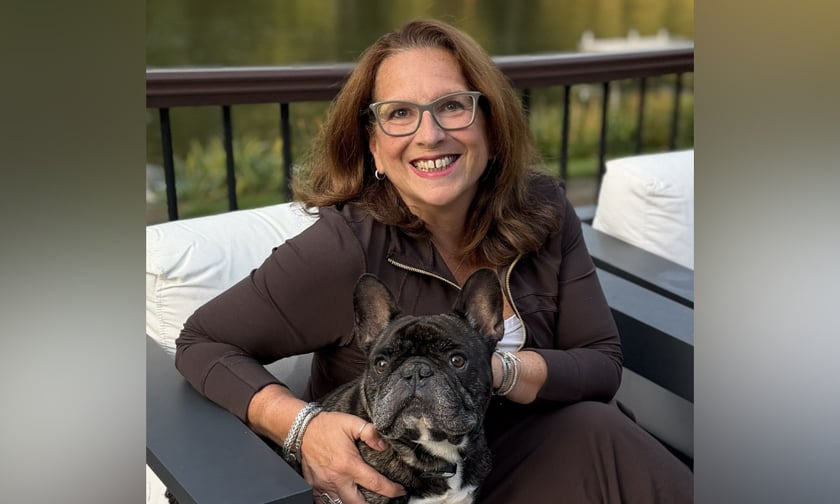
Thirty years is a long time to stay restless, and yet that is precisely what Zimmer is. Almost all of it has been spent on the distribution side of the industry, though the route has been anything but linear. She joined Hub when the company had nine people at its head office and was just beginning its push into the United States. Over 14 years, she participated in everything from its public listing and return to private ownership to roughly 165 acquisitions, responsible for market relationships and sales. “Give me something to maintain and I’ll get bored within a short period of time,” she said. “I always have to be doing new things.”
Technology was the natural next move. Zimmer had watched investment flow reliably toward acquisitions and away from innovation. The logic was blunt: “A dollar spent on acquisitions always yielded more return than a dollar spent on technology back then.” So she moved. “I’ve been in that space since it was a thing,” she said of her insurtech years. She served as COO of Embroker for five years, then ran insurance operations at Flexport, a logistics technology unicorn where insurance was one of 13 profit centres. A board seat at insurtech company LuckyTruck led eventually to the CEO role. She ran it, sold it and arrived at Davies.
The subsequent move to consulting was deliberate. “Innovation always starts in the start-up space,” she reflects, “but in order to make it real, you have to scale it, you have to really institutionalize it within established structures.” At Davies, she manages insurance distribution within the firm’s consulting and technology division, working across a global footprint from her Chicago base.
What the role looked like in practice turned out to be a surprise. She had expected her work to centre on wholesalers, MGAs, MGUs and retailers. The market had other ideas. “The majority of what we’re selling is to insurance carriers who are wanting to transform and enhance their distribution,” she notes. It is, she adds, “a very interesting space and time in the marketplace.” Nobody who has spent 30 years leaning into the wind would say otherwise.
Something significant is happening inside the executive suites of major insurance organizations, and Julie Zimmer is one of the people watching it happen in real time. The conversation has shifted. Not incrementally, but meaningfully. “We are shifting from ‘how can we use technology to enhance our processes to sell more?’ to ‘how can we create efficiency, impact the bottom line and use technology to redefine our operating models?’”
It matters because the recent wave of consolidation created a particular kind of mess. Acquisition after acquisition drove impressive top line numbers while leaving behind a tangle of divergent legacy systems, poorly integrated businesses and damaged margins. Ripping out core legacy infrastructure remains prohibitively expensive. So organizations are asking a different question: how do you extract genuine performance from what you already have, without, as Zimmer puts it, “betting the farm on ripping out all of our systems and putting new systems in?”
Davies’ answer is the unification layer: a platform that sits on top of existing core systems, preserving them as systems of record, while delivering a unified and customizable user experience across underwriting, claims and delegated authority or program management. Three workbench modules form the foundation, designed to sequence tasks, surface relevant data and give meaningful visibility to the professionals working within them every day.
Technology, though, is only part of the equation. Before any unification layer can be deployed effectively, there is serious consulting work to be done. That means mapping current processes, calculating the true cost per transaction across people, technology stack and operational support, and building a credible model of what the future state actually saves. “A lot of technology product providers are just plugging in a product and that doesn’t help our customers,” Zimmer said. “We need to take it end to end and make sure the organization is ready to accept it, leverage it, manage adoption.”
Ask Zimmer which side of the equation causes more difficulty and the answer comes without hesitation. “Behavior and change management is more time-consuming.” The technology has its complications, she concedes, but those belong to teams well equipped to handle them. The cultural dimension is an entirely different matter. “Making sure that minds and hearts are changed. That takes commitment.” That commitment, she is careful to emphasize, cannot be borrowed or contracted in. It must grow from within the organization itself, sustained by its leadership and lived through its culture over time.
That reality shapes everything Davies does in implementation. Rather than imposing entirely new workflows, the team builds platforms that mirror how people already work, then gradually automates what does not require human judgement. “If I completely move the cheese on people and turn everything they’ve been doing upside down, that’s not always the most effective way to get results,” Zimmer said. “The best way is to help them continue doing what they do well, pull out what they don’t need to be doing or what can be done with AI or some other workflow tool and just allow them to do what they do extraordinarily well, more efficiently.”
The same logic governs the build versus partner question. Davies has developed its own core product suite, it sees partnerships as an important part of delivering value to clients, integrating specialist partners only where a client has a specific preference, needs speed to market or requires functionality not yet developed in house. The proprietary approach earns its keep through adaptability: the ability, in Zimmer’s words, to “mirror the customer’s current state and morph that into a future state” is worth considerably more than anything off the shelf.
Here is a problem the insurance industry has lived with for decades and largely ignored: experienced underwriters and claims professionals make consequential, high-value decisions every working day, and almost none of that reasoning has ever been captured. It walks out the door with them at five o’clock.
“If I, as an underwriter, routinely make an exception on ABC underwriting criteria, the person sitting next to me may not be making the same exception,” Zimmer explains. The Davies platform changes that dynamic by enabling underwriters to log exceptions and the reasoning behind them. AI classifies, extracts, analyses and recommends while informing colleagues whether similar exceptions have historically been sound or have led to claims. “Being able to take institutional knowledge and spread it among decision-makers only enhances the decisions that the human in the loop is taking on.”
The workbench modules supporting this are, depending on the module, between 30 and 90 per cent built out. Zimmer is entirely relaxed about what might look like incompleteness. “We are never going to get there. It’s going to be a continual evolution.” The goal was never a finished product. It is a platform that evolves alongside each client’s operating model, shaped by what that organization genuinely needs to become.
Zimmer has been thinking about artificial intelligence long enough to be impatient with the breathlessness the subject tends to generate. She maps AI maturity through clear stages: task automation, then workflow, then decisioning, and ultimately agentic AI that coordinates activity across all levels simultaneously. But in a regulated industry such as insurance, that doesn’t mean unlimited autonomy. The most effective agentic systems operate within clearly defined guardrails that determine what decisions they can make, what actions they can take, and where they must stop for human review and approval. Those intermediate stages are not merely stepping stones. They are where trust is built or destroyed.
“You have to look at AI and technology like a new employee. They’re not going to get everything right day one. You have to invest some time in training it and it has to have a little bit of tenure to start really reflecting what is practically happening at the execution level.” Davies’ platforms are designed with this in mind, showing users precisely what the AI did, when it did it and why. That transparency allows organizations to catch errors, build confidence and gradually extend their reliance on the system. Trust is earned, not installed. The retraining demanded of human users is equally significant. Professionals who have spent careers reviewing every available data point must learn to focus on the five that actually move the needle, trusting AI to surface and evidence the other 95. “That is a hard transition for people to make,” Zimmer said. The philosophy underpinning everything holds steady: “We are not trying to replace that. We’re trying to enhance it.”
None of which is abstract. One of the most pressing practical problems Davies addresses is the inability of large organizations to generate meaningful portfolio views across an enterprise. When performance data arrives via Excel from multiple divergent systems, sound real time decision making becomes effectively impossible. If trends are visible only 60, 90 or 120 days after they have manifested, Zimmer said, that delay “could cost an enterprise organization millions of dollars.”
Zimmer’s view of where the wider market is heading is pointed and specific. The insurance supply chain is contracting. Carriers, whom she refers to as the manufacturers, are moving steadily closer to their end customers. The traditional distribution model required educating hundreds of salespeople on a carrier’s product suite and relying on them to recall the relevant coverage at the right moment. “We were relying on them to remember,” she said, and the limitations of that model are self-evident in hindsight.
AI driven matching changes the equation entirely, directing the right information to the right person at precisely the right moment. “I’m not saying we’re cutting people out of the supply chain, but I do think it’s contracting.” Embedded insurance is, she said, “coming up fast and furious.” Distribution silos are already blurring: wholesalers are going direct, acting as MGAs and holding coverhold authority simultaneously. The comfortable old classification system no longer reflects reality.
The most provocative part of Zimmer’s argument concerns where the real technological opportunity now sits, and it is not where most people have been looking. For years, the industry poured investment into the front end: customer portals, quoting engines, bind and issue capability. “We thought it was the hard piece ten years ago,” she said. “But now it’s the easy piece.” The market is simply too crowded for any front end advantage to hold.
The genuine opportunity lies in the back end, which is precisely the territory Davies is building into with its workbench platforms: endorsement processing, turnaround time, claims reporting, AI driven first notice of loss. These are the functions the industry consistently deprioritized after the quote, bind and issue transaction was complete. The gap is real and the moment to close it is now.
Zimmer’s summation carries the quiet authority of someone who has earned every word of it. “It’s a very exciting time where we are entering a new space where target operating models are being evaluated as opposed to just systems. And I think it’s a great opportunity for us as an industry to build trust with the customer, to create transparency and to really raise the bar on what we’ve spent our whole careers trying to improve and build upon.”
Away from the workbench platforms and boardroom conversations, Zimmer keeps it deliberately simple. She lives on a river and in summer takes the boat rather than the car to dinner. She reads real books and carries one in her briefcase to every meeting. A four-year-old granddaughter in Kansas City accounts for hours of facetime, along with fond memories of years spent as a horse show mum and motocross mum, supporting children who both, she said, are better for having gone all in on their passions.
Thirty years in, and Julie Zimmer still sounds like someone who just got started.